

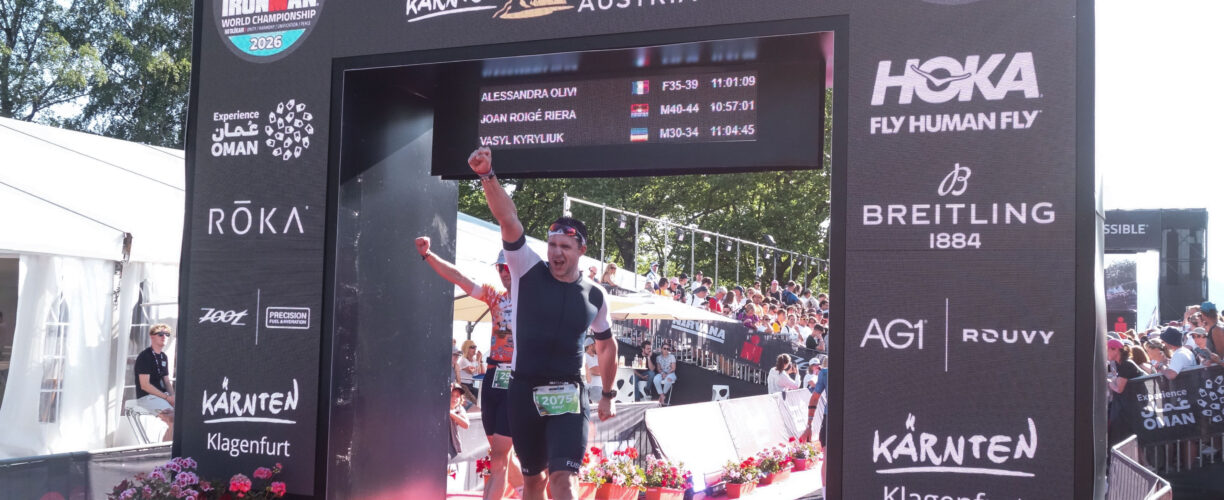
Vasyl Kyryliuk is reporting on Ironman Klagenfurt Austria 2026.
You are an IronMan. How a YouTube video planted a seed that took ten years to bloom
The idea didn't start with a training plan or a race calendar. It started in a university library in Norway, somewhere between deadlines and the kind of quiet existential noise that comes with doing a master's degree far from home. I had started running - not for fitness exactly, more as a way to decompress, to get my head straight. And somewhere down the YouTube rabbit hole, I landed on a video of a guy talking about marathons. He also happened to do triathlon. I watched it. Something clicked.
I want to do that someday.
But I knew what it would take. Time, money, real dedication. So I filed it away and got on with life. I ran a couple of marathons. I stayed in shape - cardio in summer, gym in winter. The Ironman stayed in the back of my mind, patient, waiting.
That was ten years ago.
The Moment It Became Real
The thing that actually made it happen was a conversation with my friend George about health and staying fit. I suggested we run a marathon together to get him into proper shape. He signed up for a half. I couldn't make it because of work travel. Then I proposed a full marathon. He countered - why not an IronMan?
I said yes immediately.
Then he quickly corrected himself: "Maybe just the half distance?"
Not a chance. If you're committing, you commit fully. We were doing the full distance - 3.8k swim, 180k bike, 42.2k run. That was it.
We got on a call, opened a browser, and started looking at races. My criteria were clear: 12 months out (anything longer is a mental marathon in itself before you even start), good weather, not too many laps, a flat run course. Austria kept coming up. The bike leg in Klagenfurt has 1,850 metres of elevation - not flat, but manageable. The run is two laps and almost completely flat. Done. We booked it. It was the end of March.
Learning to Actually Bike
Next priority: a proper bike. I asked a friend who knew what they were talking about - frames, brakes, gearing, all of it - and we got a Canyon Endurace. The first time I rode it, I did 20k and barely felt it. I was completely hooked.
Norway is brutally hilly, which as it turns out is an excellent training ground whether you like it or not. I was doing one or two sessions a week, keeping it light to start. Everything was going well until life decided to complicate things.
We moved.
Selling a house, dealing with a car, living between hotels and friends' places - training became whatever I could squeeze in. I picked up an indoor trainer and set up Zwift, which honestly saved me during the cold, dark Norwegian winter. If there's a lesson there, it's this: find a way to keep moving even when everything around you is in chaos.
Dubai, and Finding the Coach Who Changed Everything
After the move to Dubai, there was a proper gap - mid-January to mid-March - where I could only manage occasional runs and gym sessions. I knew I was behind. What I didn't know is that I was about to get very lucky.
I needed swimming goggles and a trisuit. I Googled triathlon stores in Dubai, found a Reddit thread mentioning Sported, and decided to check it out. The lady at the store asked if I was racing. I said yes. She asked if I could swim.
I could not, at least for long.
She invited me to come to the beach the next morning for the TriDubai swim group to meet their coach, David. I showed up. I was last. It felt genuinely terrible. But we agreed to do a private session, and that one lesson changed the entire trajectory of my preparation.
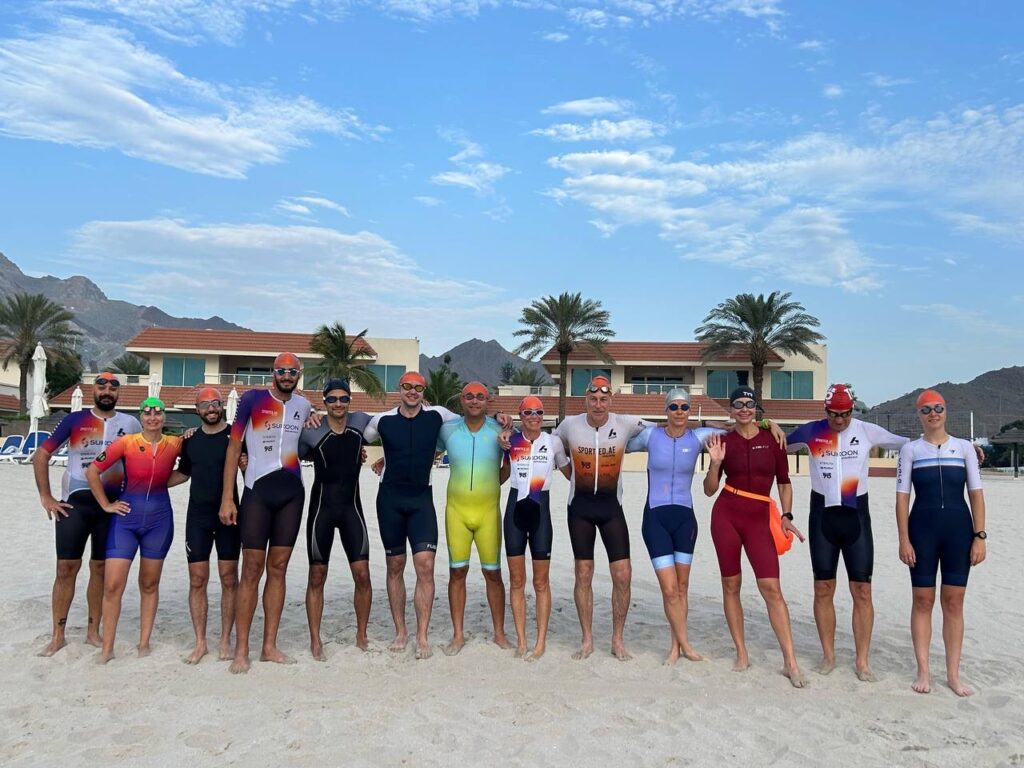
I joined the Sported group properly after that, and it was one of the smartest decisions I've made. The program was well-structured, the community was incredible, and the support during long rides was something I wasn't expecting at all. Special mention to Mehdi and Hisham - these guys would wake up at 3am to ride for five and a half hours. That kind of commitment from training partners does something to your own.
David also helped me get a proper TT bike at an amazing price. He sorted out a training camp in Khor Fakkan, including a couple of super-sprint races. I did my first Olympic distance. Piece by piece, it was all coming together.
The one thing I genuinely struggled with in Dubai: running in the heat. I simply could not hit a proper pace on long runs. The temperature made everything feel twice as hard, and I had to accept that and adjust.
What Surprised Me About the Training
I'll be honest - I was skeptical about a few things going in.
The first was the no-rest-days philosophy. David's approach is that if you want to rest, you do a 3k swim. That's your rest day. My inner voice was loudly objecting. But I tried it, I committed to it, and it worked. I missed exactly one Monday across the entire programme. One.
The second was the absence of gym work or strength training. No weights, no circuits. Instead: hill intervals on the bike, paddles in the pool, bricks. I thought I'd fall apart. Instead, I felt stronger than I had in years - and I didn't pick up a single injury across the whole training block. Not even a niggle. The longest I've ever gone without some kind of small pain.
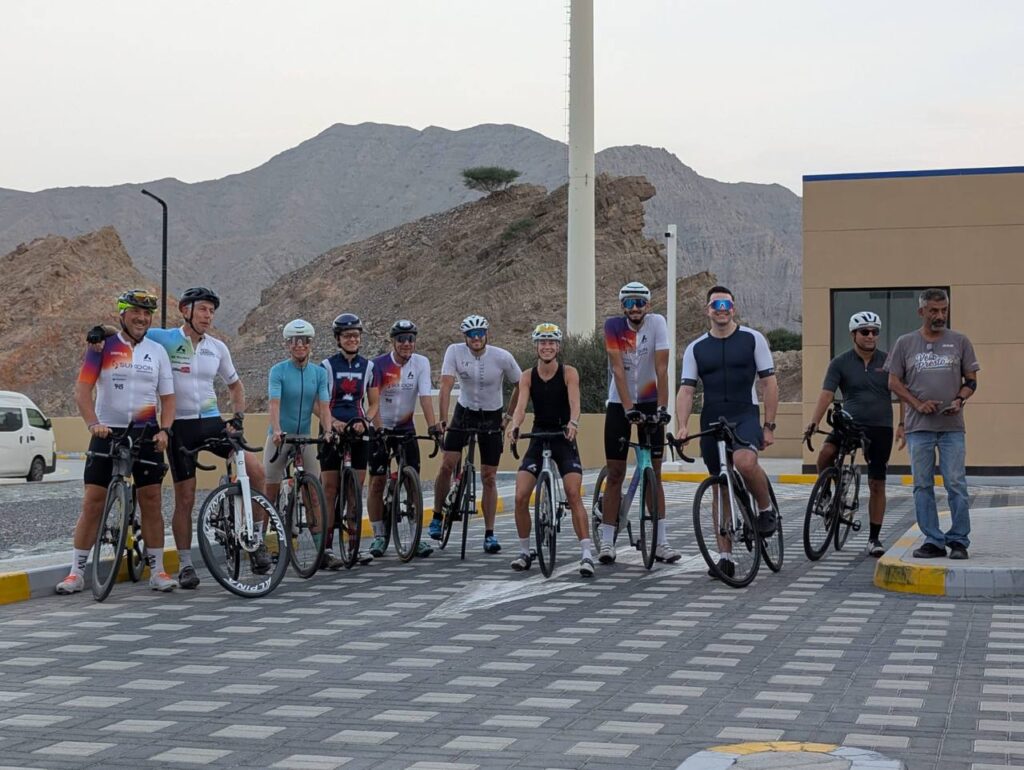
Peak week hit just over 19 hours of training. Main focus on the bike, bricks, swim. It sounds like a lot, and it is, but by that point the body has adapted. It's almost normal.
The taper felt almost suspicious. Two weeks of pulling back, shorter sessions, higher intensity. Three days before the race I felt genuinely powerful. That feeling - that springloaded readiness - is one of the stranger sensations I've experienced in sport. You've done the work. Your body knows it. Now you just have to trust it.
The Week Before: Vienna, Bikes, and Explosions
I flew to Austria a week early. Time zone, weather, altitude - better to give the body time to adjust. I got in a couple of lake swims, a bike ride with some proper elevation, and even scouted the second-biggest hill on the race course. Being able to pace yourself on a climb you've already ridden once is worth more than any data.
Then, two days before the race, my friend's bike didn't arrive from Oslo.
The airline had left it in Norway. They promised next-day delivery. It didn't happen. By the time the bike made it to Austria, the UPS window to Klagenfurt was too late. So we drove to Vienna - eight hours round trip - the day before the race, picked up the bike ourselves, and drove back.
17,000 steps. More stress than any long training ride. Not ideal race-day preparation.
It got worse at bike check-in. The heat was savage, and I decided to release a bit of air from my tyres. The rear valve was completely sealed with tubeless sealant. I unscrewed it - no air came out. I was about to just leave it when I heard a loud bang from a few bikes down. The guy next to me had just had his front tyre explode in the heat.
I took that as a sign. Joined the mechanic queue - 30-40 minutes - and got the tyre sorted.
That evening: pasta and rice dinner, everything packed. 8pm in bed.
I slept like a baby. Seven and a half hours. I still don't fully understand how.
Race Day
Breakfast at 4am - pasta, toast, banana - extra electrolytes on the way to the start. Wetsuit on. Into the rolling-start queue. Five athletes at a time into the water. It took 30 minutes to get to the front, and I wasn't nervous once. I was excited. I knew I'd done the work. The only question was the time.
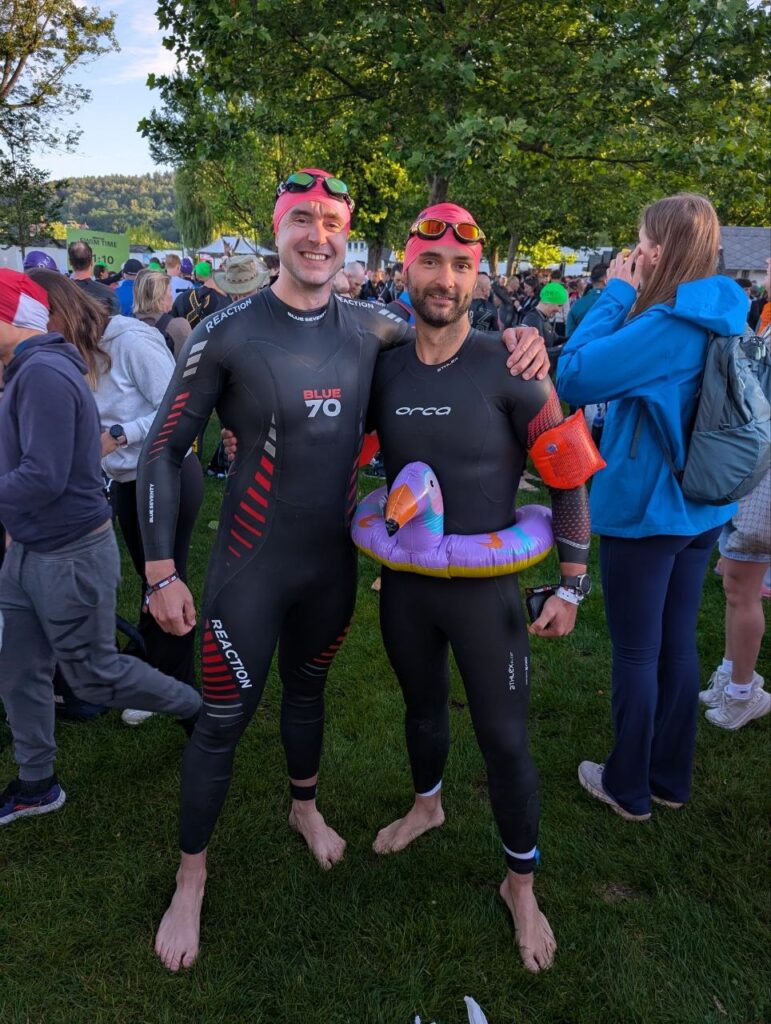
The Swim - 1:13
I got into the water and immediately looked for fast feet to draft off. The first third was almost effortless. I was hopping from one set of feet to the next without feeling like I was working at all. Midway through, I caught athletes wearing caps from the earlier wave. Good sign.
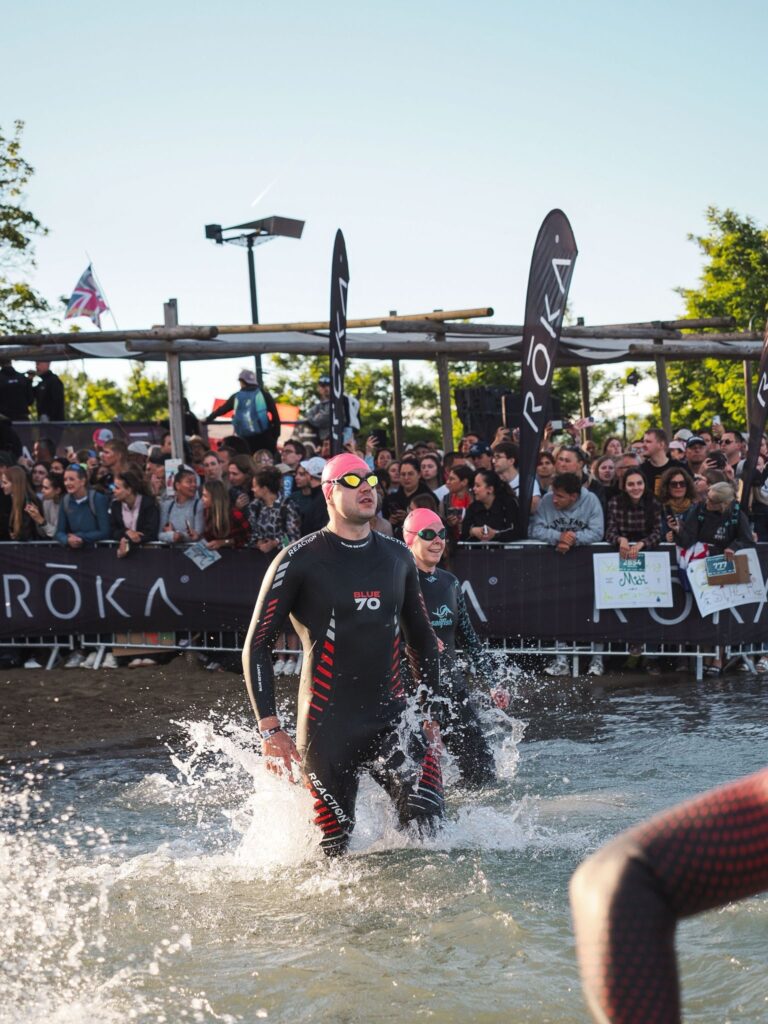
Then we turned toward the canal with the sunrise directly in my face. I couldn't see a single buoy. I swam what I thought was a straight line. After a few minutes I stopped to check. I was drifting - and apparently so were the three swimmers tucked in behind me.
The canal section was busy and chaotic. At one point I swam directly over a guy who was mid-breath. I genuinely heard him swallow a mouthful of water. If you're reading this - I'm really sorry.
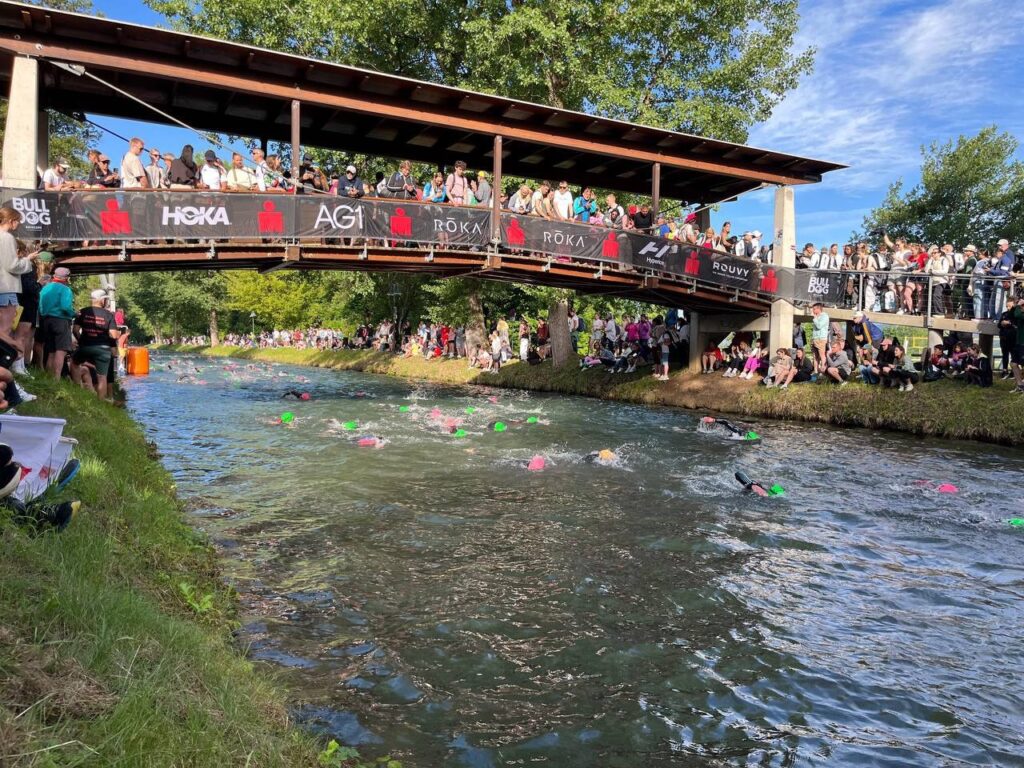
I got out of the water with help from a volunteer and looked at my watch. 1 hour 13 minutes. I smashed it.
T1 - 10 minutes
Longer than planned, but worth it. Got a gel, electrolytes, a banana, sunscreen, and a bathroom stop. The transition itself is 650 metres long, so the time adds up.
The Bike - 5:17
Started easy for the first 10k. My power meter decided not to work - I couldn't get it to connect and couldn't see cadence or power. For about 30 seconds, this bothered me. Then I let it go. I knew how I should ride. I'd spent enough time on this bike to know what effort felt right.
Around kilometre 15, there was a serious crash. One rider had hit the ground hard - face covered in blood, missing teeth. That image stays with you. You file it away and focus.
The nutrition plan was the same as every long training ride: 83g of carbs per hour, mostly as carb drink. Four prepared bottles, two bananas, Haribo for the middle, SiS ISO gels (four per hour at 23g each) for the final stretch. Aid stations for water and ISO drink swaps.
I saw George somewhere on the course - he looked strong, had come out of the swim before me. That was a good moment.
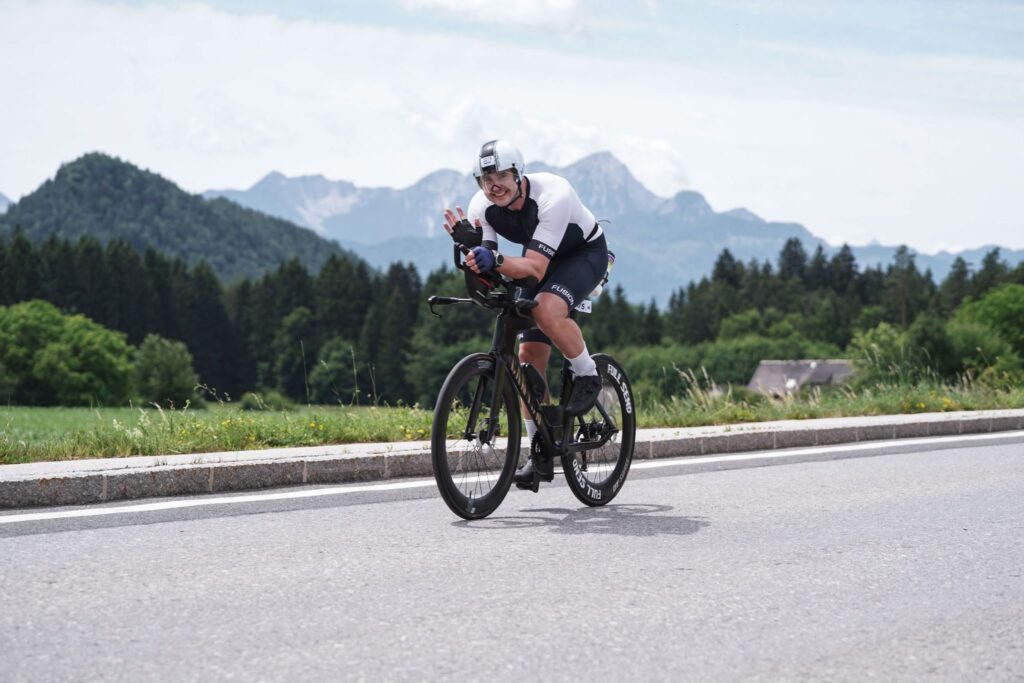
Second lap, a bottle holder screw worked loose and I lost an ISO drink. No drama - I had a spare. The hills hit harder on the second lap, especially the big one past 70k. Heart rate went to 150bpm, which was above my target ceiling of 130bpm. I eased off, let it come back down, and kept moving.
I'd packed two small salami sausages as rewards - one at 2 hours, one at 4 hours. Ate the first. Lost the second just before the 4-hour mark.
I was really looking forward to that salami.
An official also shouted at me for littering. I was just trying to eat my salami in peace.
The last 20k I treated as a cool-down - backed off intensity, let the legs recover for the run. Average speed: 33.5km/h. Estimated average power: 261 watts. Total bike time: 5 hours 17 minutes. I got off the bike feeling like I had left something in the tank. That's exactly where you want to be.
T2 - 5 minutes
Red Bull. Banana. Electrolytes. Run shoes. Done.
The Run — Where It Gets Real
The first 7k felt good - too good, actually. I had to consciously slow myself down. The plan was simple: run from station to station, every 2.5km or so. Walk through each one, grab food, pour water over my head, grab ice and stuff it under the trisuit. The temperature was 27°C.
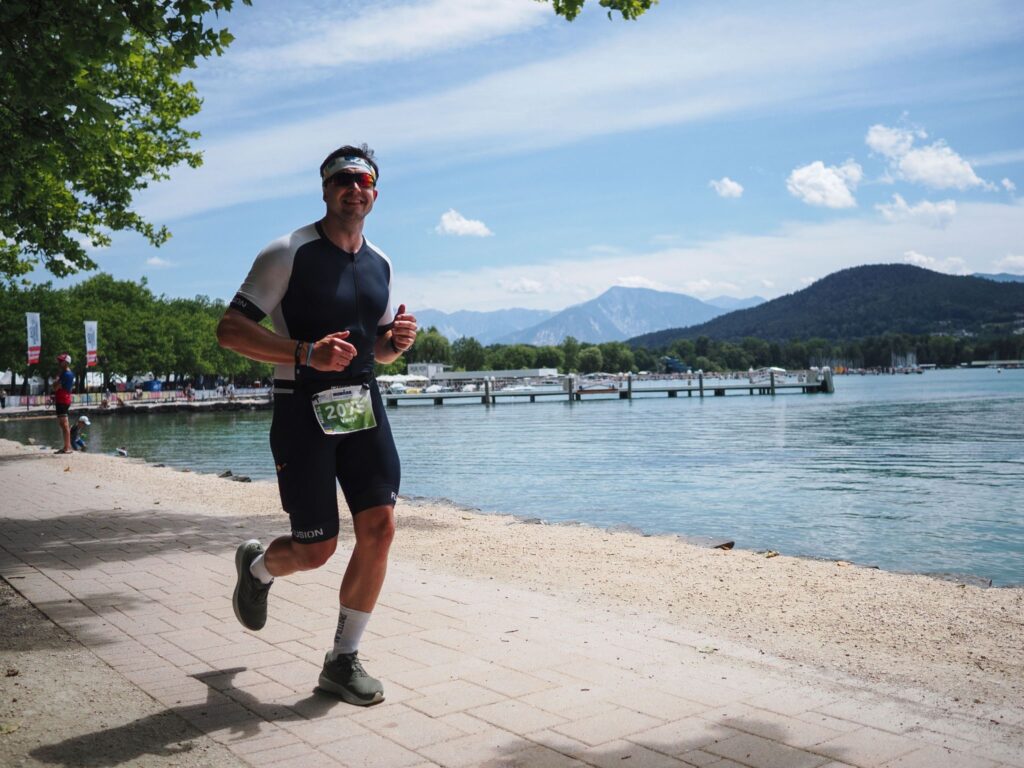
I saw George again. I shouted "Davai, davai!" He was still moving well.
At 7k, the legs started to register what had happened over the previous six-plus hours. The pace I wanted - around 5:50 per kilometre - required more effort to hold. I started taking cola at the stations, which helped more than you'd expect. By 13k, I felt good again. Ramped back up.
The run nutrition: three SiS ISO gels per hour, cola, fruit at stations. The fruit deserves a mention. After eight-plus hours of gels and sugar drinks, a piece of watermelon or orange slice is genuinely the best thing you have ever eaten in your life. There is no comparison.
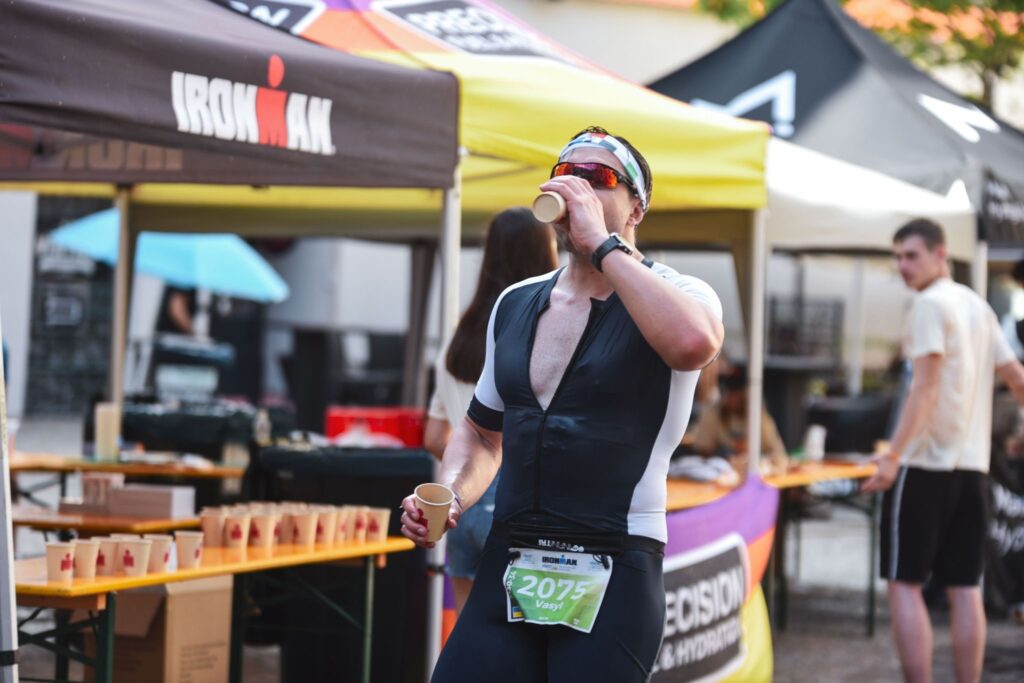
The middle section was a rollercoaster - one kilometre feeling strong, the next feeling awful. That's just IronMan running. You remind yourself why you're there and you keep moving.
At kilometre 27, my feet started to really hurt. Not tiredness - actual pain with each step. I narrowed my whole world down to one goal at a time: get to the next station. That was it. Nothing else existed.
I took a caffeinated gel somewhere around 30k. It did nothing. Absolutely nothing.
What did help was seeing my wife and our friends in the crowd. Every time I spotted them, the pain stepped back. The crowd across that whole run - the people who brought garden hoses to spray runners down, the volunteers who kept loading ice into my hands, the strangers screaming my name - gave me more energy than any supplement on the course.
Then, at kilometre 37, something shifted.
I don't fully understand it physiologically, but I started to feel fresh. Like, genuinely light on my feet. "It's just a 5k now. This is nothing. This is a park walk." I was smiling. Actually smiling. Shouting thank-yous to the crowd. They were shouting back.
At 39k I caught up to a guy I'd exchanged ice with a few kilometres earlier. I told him, "Come on, man - 3k left, let's go." He looked at me and said, very calmly: "Yes. But for you. This is my first lap."
I felt terrible. Sorry, man. Truly.
The last kilometre was pure noise. You could hear the finish line before you could see it. And then the red carpet appeared.
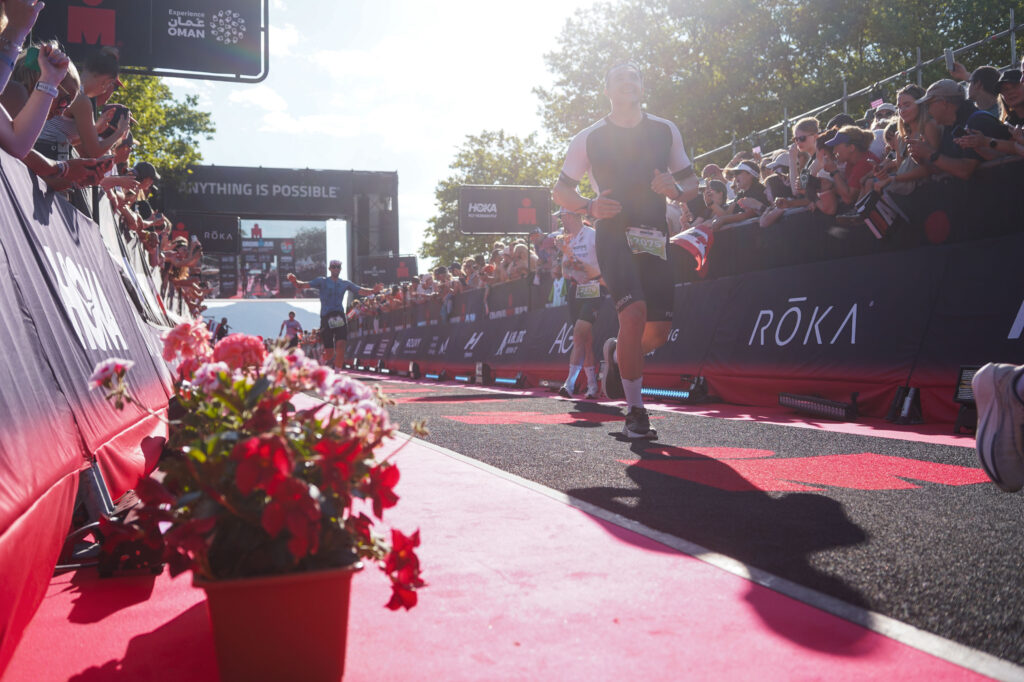
I didn't sprint. I wanted to feel every step of it.
I saw a bell - tried to ring it, it didn't work - and then I saw the finish arch. My wife was standing there holding my medal.
And then: "Vasyl, you are an Ironman."
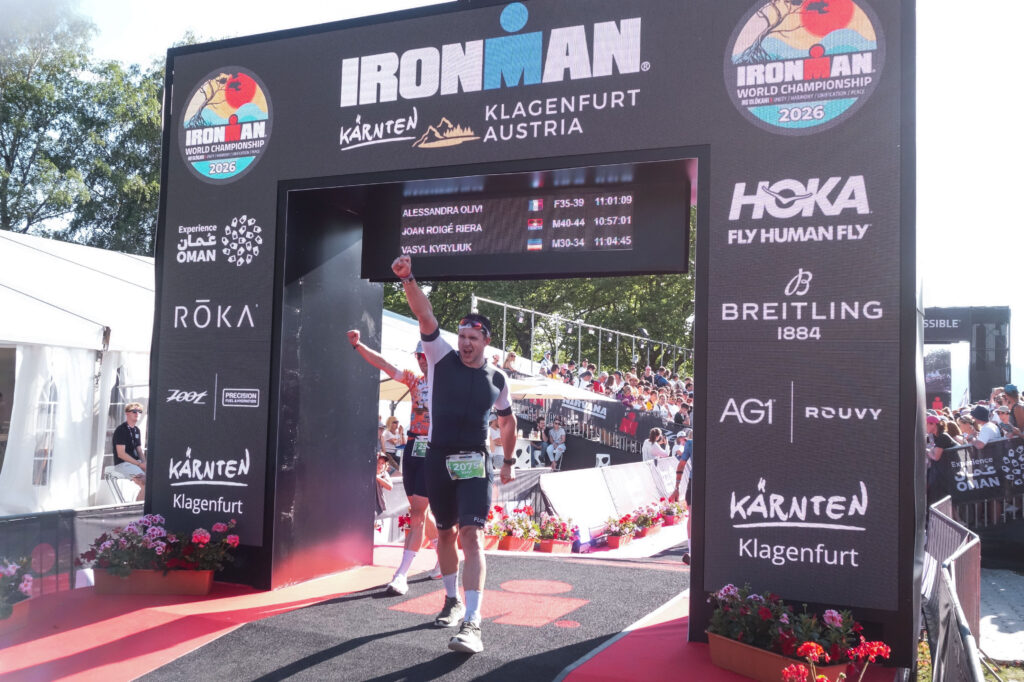
11 hours, 4 minutes, 45 seconds. I couldn't have asked for a better time if I'd written it down in advance.
The Finish Line, and After
I hung around at the finish to wait for George. Less than ten minutes later, he crossed the line: 11 hours, 14 minutes, 33 seconds. My wife had suggested I ask for a second medal so I could give it to him as he finished - that's exactly what I did. We hugged. We took some photos. We didn't quite know what to say.
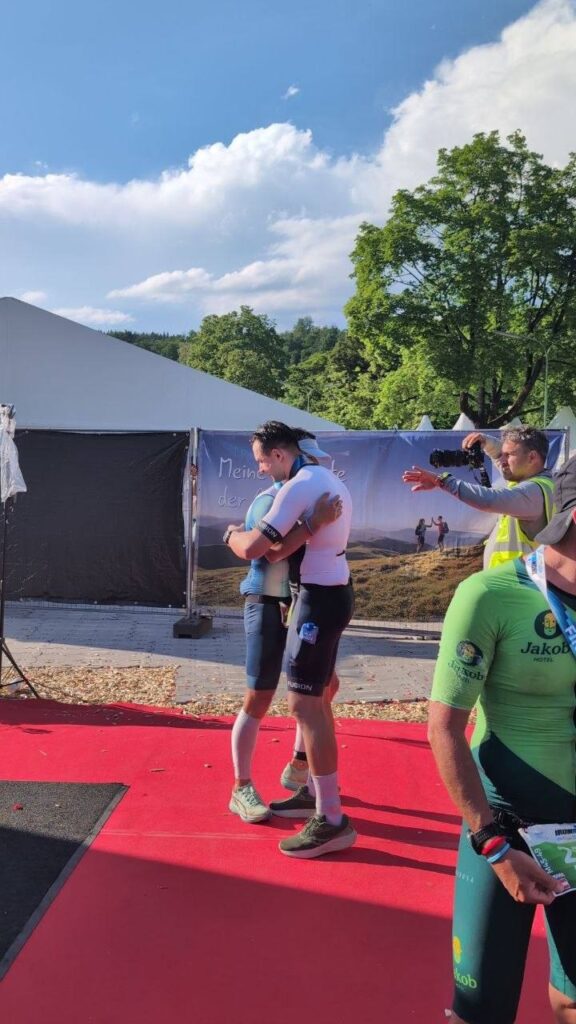
Our friends had champagne waiting at the beach. They opened it and sprayed us. We drank some, standing with our feet in the cold water, completely unable to process what had just happened.
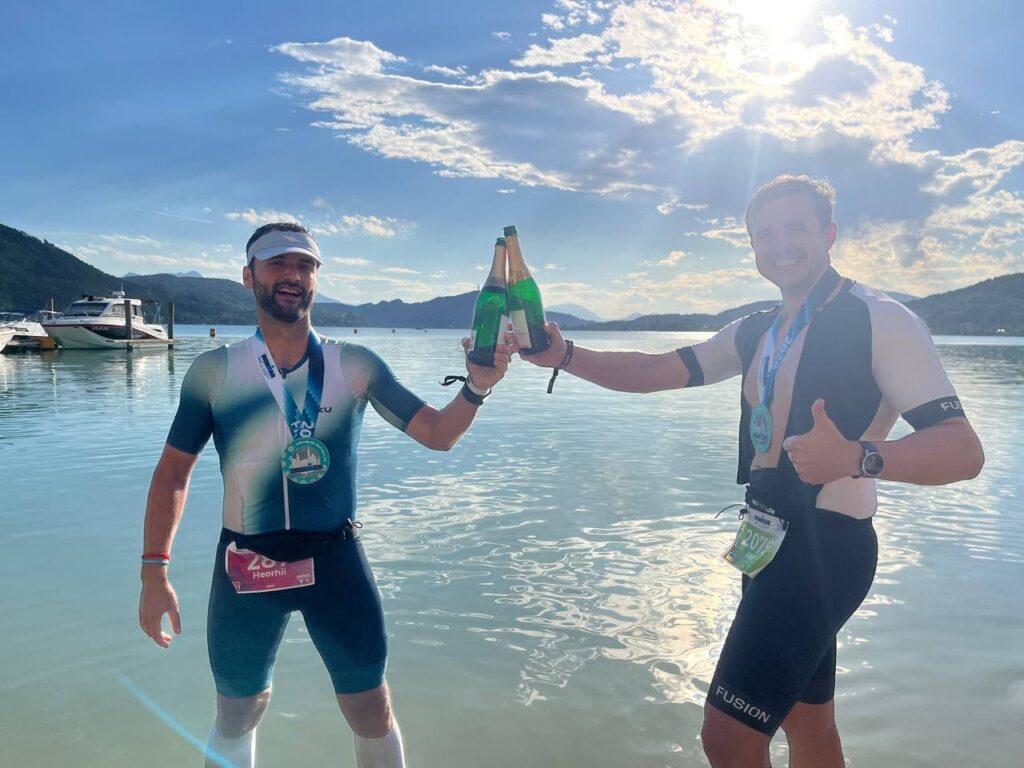
Then pizza at the IronMan tent. Then the shuttle bus that never came. Then a long walk in hail to collect our bikes from transition, both of us quietly thinking about the athletes still out on the run course.
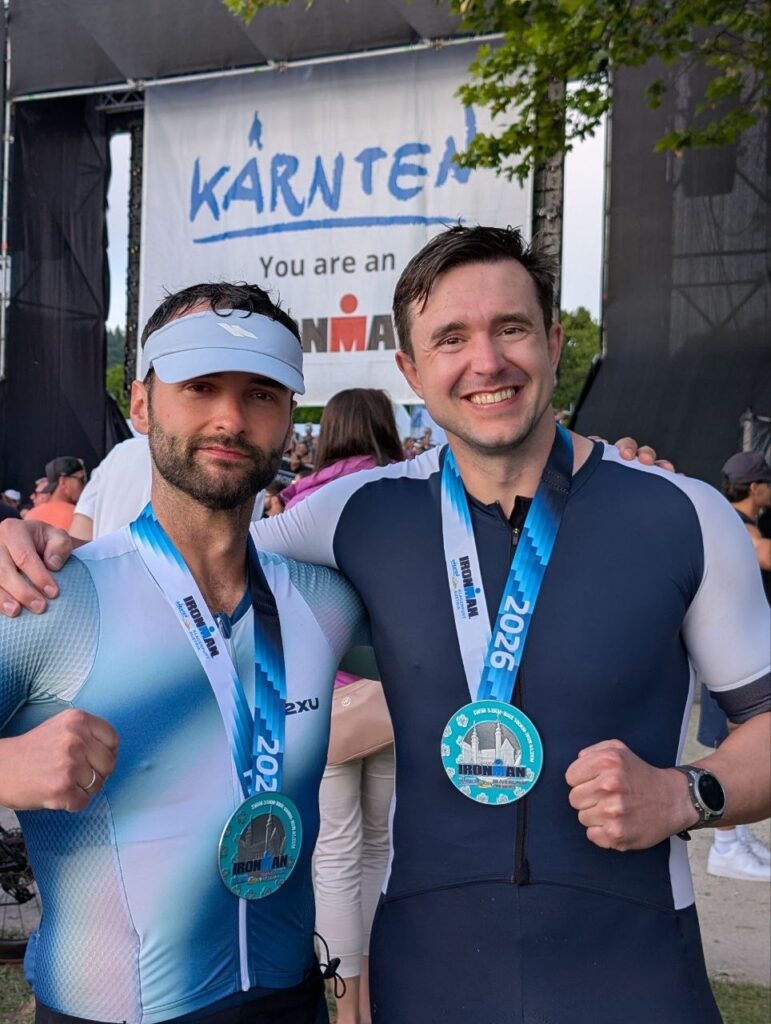
Sleep that night was impossible. Too wired, too much sugar and caffeine still in the system, too many emotions. I didn't care.
The next morning I woke at 7am, completely wrecked. Garmin body battery: 20. HRV: crashed from the high 90s down to the low 30s. And I was starving - not normal hungry, but the kind of primitive hunger where you want meat and salt and fat and you want them immediately.
We spent the day at the awards ceremony, bought an embarrassing amount of meat for a barbecue, and wore our medals basically the whole time. Because we had earned them.
I remember sitting there at some point, thinking: never again. Full distance? No. A 70.3 someday, sure. But another full? Absolutely not.
The brain is funny that way. It forgets the pain faster than you'd expect.
Let's see.
Thank You
To every volunteer on that course - you were extraordinary. To the friends who travelled to be there - it meant everything. To my wife: you believed in this when I wasn't sure I did. I know it was a lot, and I would not have finished that race without you.
And to Coach David and the whole Sported Coaching team: I found you by accident and it turned out to be the best accident of this whole journey. To anyone training with that group - just follow the plan. Be consistent, trust the process, and you will be genuinely surprised by what your body is capable of.
Ironman Austria, Klagenfurt - June 14, 2026. Finish time: 11:04:45.