

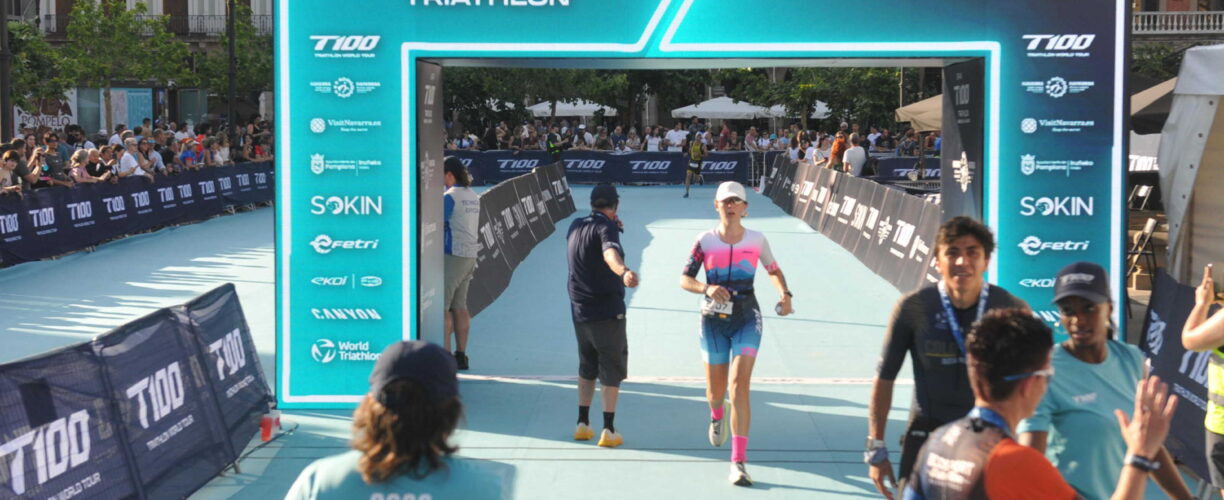
Eva Graf reporting on T100 Pamplona
Date: 23 May 2026 | Location: Pamplona, Spain
Not every race is perfect. And maybe we learn more from the ones that do not go as planned.
I signed up for T100 Spain a couple of weeks before the race, despite having had it on my radar for months. With some family based in the South of France, it was the perfect opportunity to show the people I love how I spend most of my time outside of work. Knowing that I would be sharing this experience with my mother, my biggest supporter, and tonton (great uncle) made the preparation even more special.
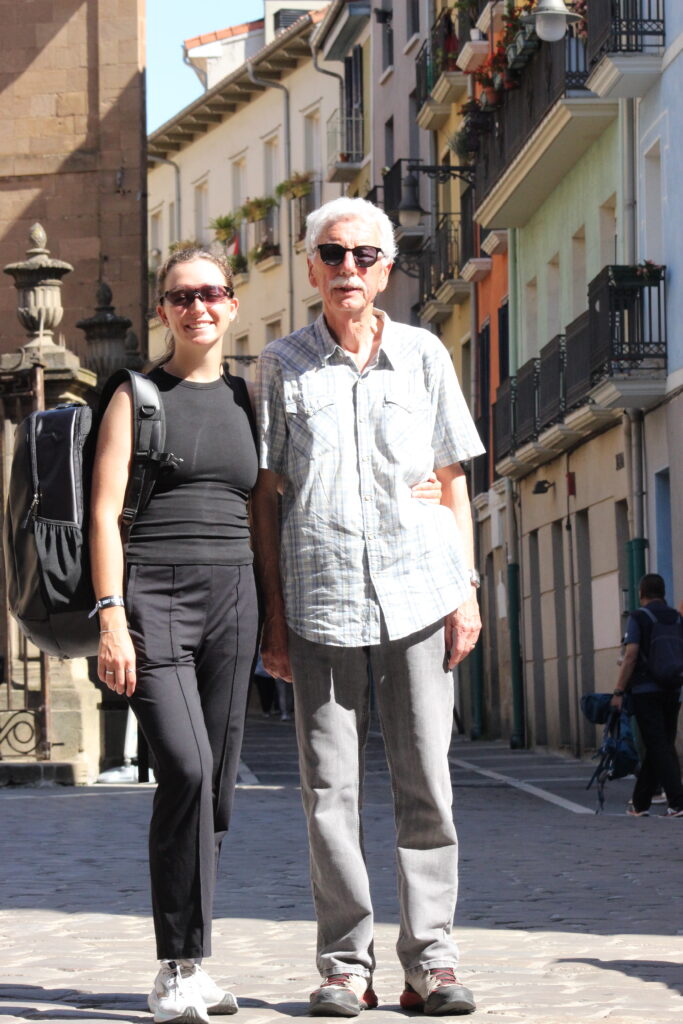
But life does not always go as planned. Despite the hard work I had put into the last months of preparation after joining David Hunt and the Sported coaching team under the TriSutto method, I caught a cold two weeks before race day. I took things easier during that time, but I had not fully recovered by the time I was standing on the start line in Pamplona on May 23rd.
Race organisation
I had been genuinely excited about this race for one specific reason: it is the only T100 in the series with no laps on the bike. A point-to-point bike course is rare in the series and immediately appealing. The flip side of that is logistics.
The day before the race, we had to transport the bike to T1 (over 40km from Pamplona). On race morning, athletes and supporters took a bus from the city to the reservoir where the swim would start. The challenge was that we arrived at 9:45 at the race venue with a start midday.
One thing that makes T100 races genuinely special is racing on the same course as the professionals. I am not sure there is another sport in the world where an age grouper and a world-class athlete share the exact same terrain on the same day. That never gets old. But there is a tension in the T100 model between being a great broadcast product and being a great athlete experience and at Pamplona, it showed. A 1pm start time, in full Spanish sun, with no proper shaded waiting area to accommodate all participants, is a decision made for television, not for the people racing.
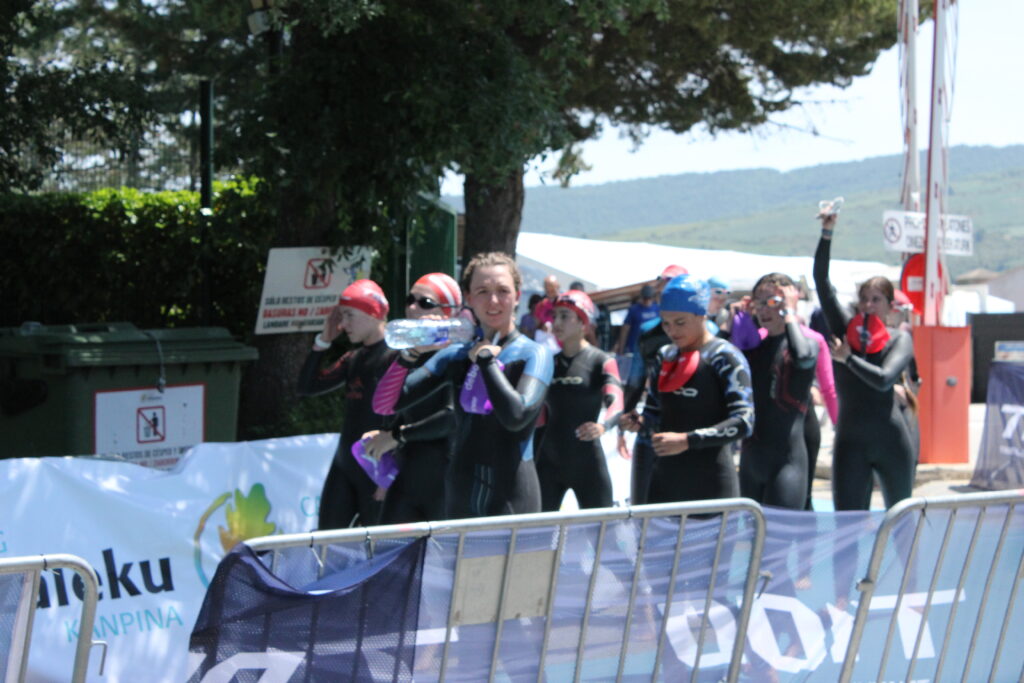
What struck me most was the pre-race wait itself. We were held in the transition zone, waiting in our wetsuits, frying under the sun: I was already uncomfortable before the race had begun. There is then a long walk downhill from T1 to the water, and the whole start sequence felt rushed, as if they suddenly remembered we needed to get in the water. Thank goodness I had thought to bring a water bottle to stay cool and calm.
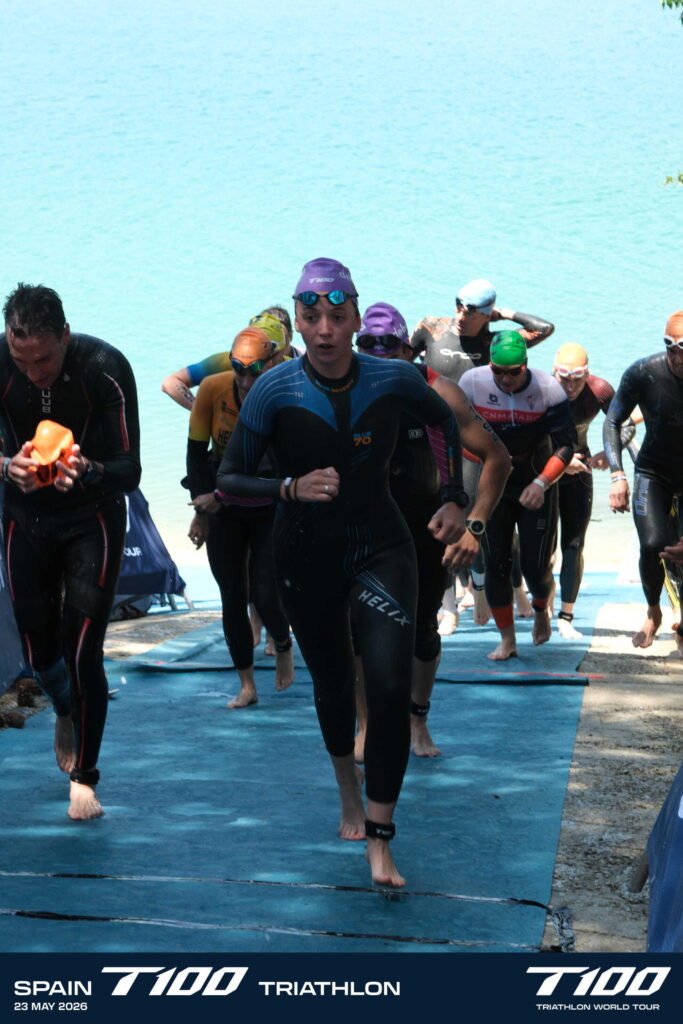
Swim: 33:33 | 1:40/100m
The swim was, in a word, wonderful. Cool, clear water in a reservoir with visibility I rarely experience in open water. After the chaos of the pre-race wait in the heat, slipping into that water felt like a reset. I came out of the swim feeling good, which matters more than people sometimes acknowledge. All those kms in the pool alone and in the sea with TriDubai seemed to be paying off.
Out of the water, a steep uphill climb to the bikes. I started running and some of the guys I had passed in the water started running alongside me. I took that as a good sign.
The transition tent was chaotic. Reaching your bag was a fight, and most people were changing on the spot because it was not clear where else to go; nobody wanted to risk losing their wetsuit given we were not returning to the reservoir to collect anything.
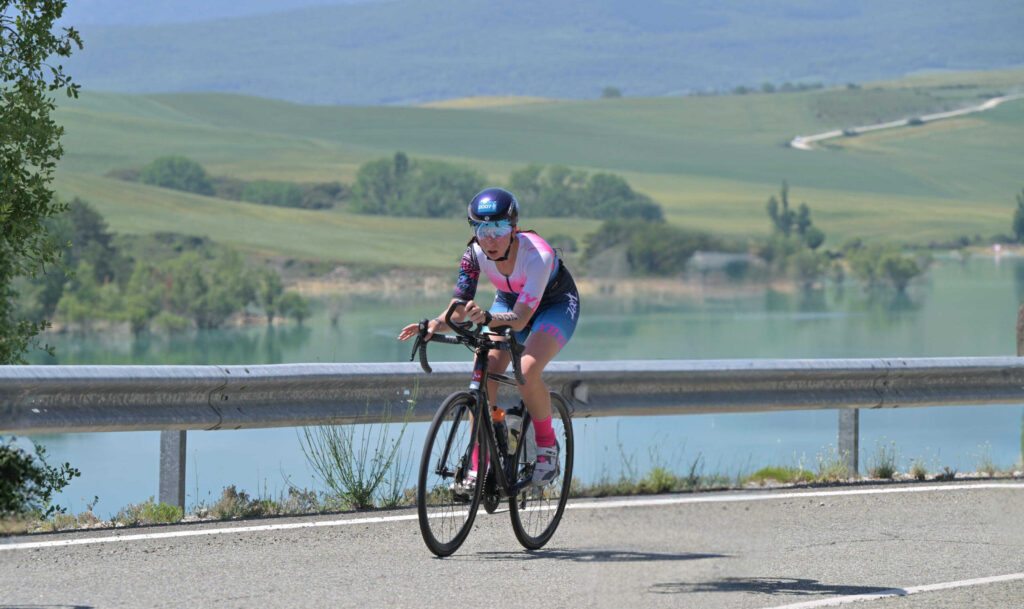
Bike: 2:51:22 | 26 km/h | 73km | Elev. Gain +866m
The bike course was scenic in a way that made you momentarily forget how much it hurt. It goes up and down, but mainly up and from early on you saw athletes stopped on the side of the road, waiting for the bus to collect them. That is never a good sign.
I followed my fueling strategy, but I simply was not ready for the fluid demands of that day. The heat was relentless and the climbing made it worse. The volunteers at the aid stations were remarkable, as were the locals who spontaneously sprayed us with water as we rode through their towns. Those small human moments carry you further than you expect.
I arrived at T2 hoping to execute the flying dismount I had been practising. The last few hundred metres were uphill. I walked.
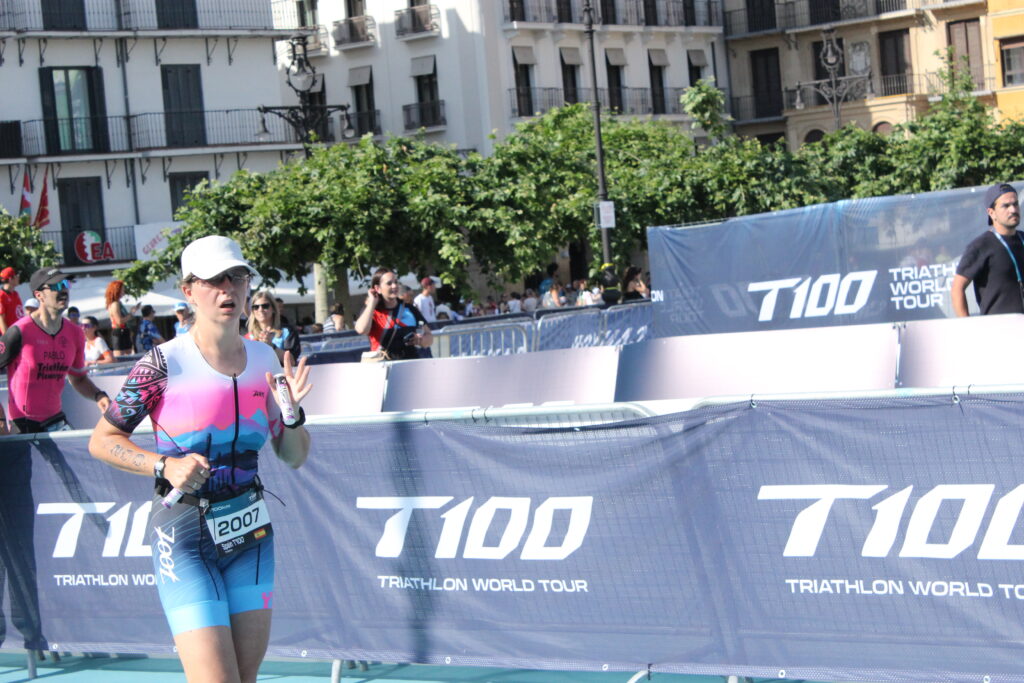
Run: 1:53:00 | 6:40/km
The run was survival. Three laps through Pamplona (uphill, downhill, road, pavement, trail) in front of crowds who were genuinely extraordinary. The atmosphere on the run course was great: athletes encouraging each other, locals cheering, and a general spirit that no one was going to let anyone give up quietly, despite the never-ending heat.
I walked. More than once. I thought about quitting, on the bike and on the run. Both times I came back to the same thought: my mother and my tonton were next to the finish line, waiting. The hardest thing about being a supporter is the waiting. I was not going to make them wait a moment longer than necessary.
Running past the finish line three times before being allowed to cross it is genuinely one of the crueller designs in triathlon. One athlete near me had printed on the back of his trisuit: "We love the pain." At that point I was not sure I agreed but I understood it.
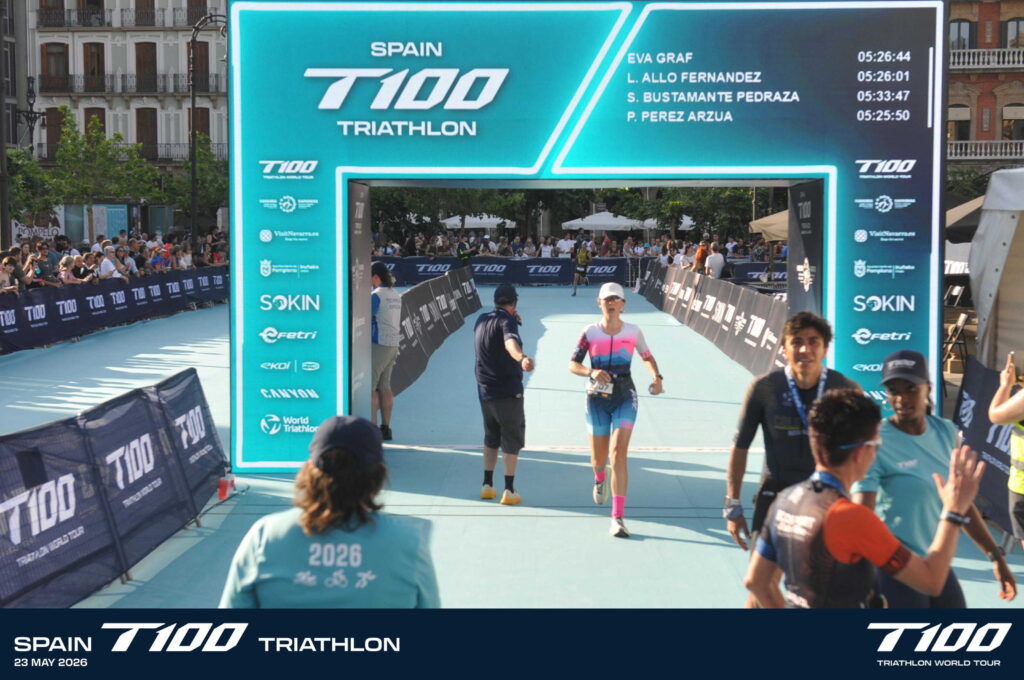
Overall: 5:26:44
This was supposed to be my fastest T100. At 73km, the bike is shorter than other races in the series, and I had expected that to translate into a faster overall time. Instead, it was my slowest and my hardest. Also, without question, the most scenic T100 I had done (Dubai 2025 and Qatar 2025).
T100 races have a format I genuinely enjoy as a swimmer. But the series still has work to do to compete with Ironman on the operational side: the logistics around a point-to-point course need more thought, and the athlete experience before and during transition felt unfinished compared to what the race itself delivered.
What I will remember from this race is not the time. It is the water in that reservoir. The locals with their garden hoses. The athlete who told me to keep moving when I had slowed to a walk. And crossing that finish line knowing that somewhere just past it, the two people who came all that way to watch me were finally able to breathe again.
Thank you for waiting. Love you, mum.
By Eva Graf