


Boulder 70:3 - A Beautiful Struggle
Boulder 70.3 had been on my bucket list of 70.3 races for a while and this year we finally made it across to the US to give it a go. An amazing experience and I learnt a great deal both as an athlete and a coach. This was my first race at Altitude. Boulder is 5,400 ft above sea level, the travel time is close to 30 hours door to door and there is a ten hour time difference to the UAE.
With this in mind, we had planned to travel 10 days before the event and spend 8 days in Breckenridge Colorado at 10,000 feet to try and acclimatize before race day.
Training prior to race day consisted of two swims in the local pool, two easy bikes and a couple of runs. The logistics of this race had some challenges. On race day athletes were not allowed to park at Boulder Resevoir, the race venue, and we had to park at a large car park close by and 2,000 athletes were shuttled to the start. Bikes had been racked the day before. There were no transition bags with all kit laid out by your bike, making for a very cosy transition. Having said that the organization was superb, and everybody was hugely friendly.

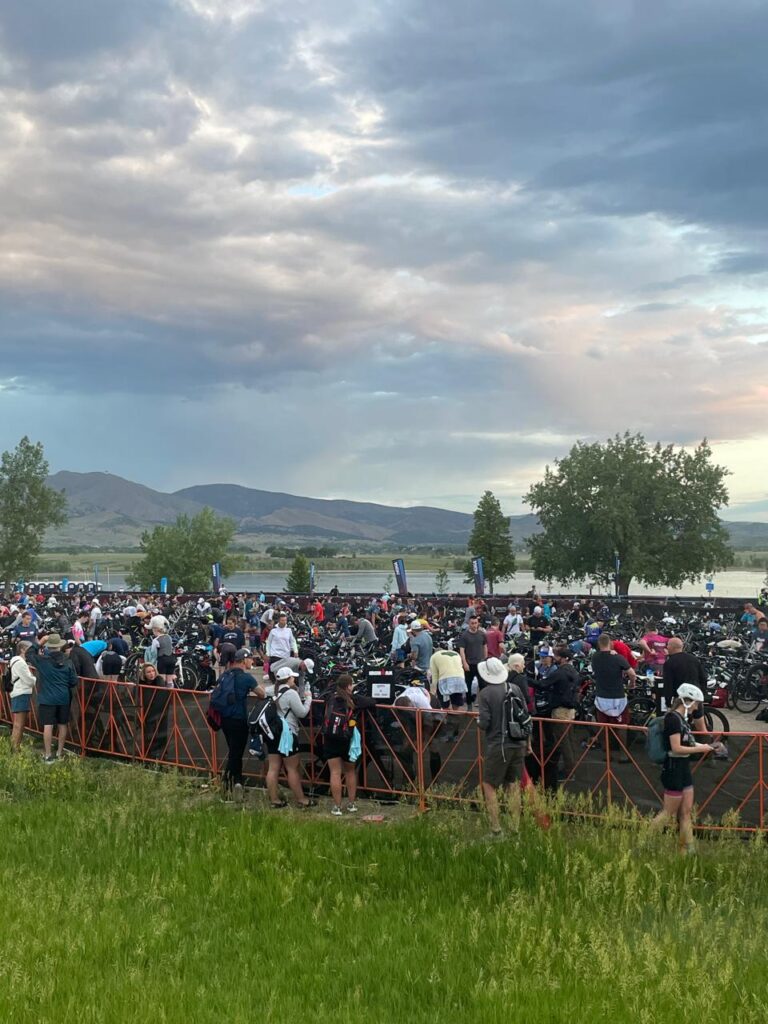
Race day weather was kind. In the days leading up to the race it had been extremely hot, but June 8th was blessed with a cool start to the day and a refreshingly cool breeze with temps rising to around 25/26, which the locals and out of towners thought was hot! It's an interesting temperature dynamic as it can be around 8 degrees when you dive into the reservoir and 30 degrees when you finish.

The Swim
Not quite the swim I was hoping for. The cold water and the altitude affected me in the first 500m and I had to stop and catch my breath a couple of times. I wasn’t the only one and there were plenty breast stroking and hanging onto the kayaks. It was a freshwater reservoir, another different experience. At the 700m turn buoy I managed to find my rhythm and some feet and by the last 700m turn bouy I had remembered how to swim. In hindsight I should probably have chosen a slightly less buoyant wetsuit. Learning point - don’t underestimate how slow you need to start at high altitude.
T1
Lovely run through the goose poop to the wet suit "strippers". Lie on your back and have your legs pulled out of your wet suit by a volunteer. Sometimes in T1 there are also sunscreen "slappers" who slap sunscreen on the athletes, but I must have missed those. At altitude this is especially an important consideration given closer proximity to the sun. So plenty of strippers but not a slapper in sight!

The Bike
A two-loop bike course through the rolling hills in front of the Flatiron mountain range (the front range). Total elevation gain approx. 650m which is very manageable with some gradual inclines followed by some very fast downhills. The great thing about a two lap bike course is that you can work out on the first lap where the fast bits and windy sections are so you can smack it on the second lap. This is a really enjoyable bike course, stunning scenery. Gosh these Americans are really well behaved; no drafting at all! On the second lap I really wanted to push on into T2 there was a gradual downhill but there was no gas left in the tank and the legs just would not respond, in part due to the reduced oxygen in the air.
T2
Not great. One of my shoes came off as I jumped off my bike. A few lost seconds there.

The Run
Two lap course around the reservoir with fabulous views. After the first mile I was beginning to think I had left my run legs on the Emirates flight. It was a bit of a struggle. At altitude even a 30m incline can feel like hard going. The first half of the lap is a gradual climb, and this gives way to a lovely long down hill stretch just before the start of lap 2. Adjusting to the altitude meant settling into that sustainable uncomfortable pace that you judge you can keep going until the end and on the day that was around 6mins per km. The altitude, meant my HR was about 150bpm for the entire run, which is 10bpm below my Max HR but about 10 bpm more than I would expect to run at sea level. Aid stations were brilliant with plenty of cold ice for the front and back of your trisuit. Always ice down the pants when it is hot! Caffeine gels at KMs 3, 8, 13 and 18 plus 500ml of BiG Endurance washed down with flat coke saw me through. The last 5km being a mental battle not to walk, when walking seems easier. I always remember a quote on the TriSutto quote wall Technique Under Fatigue (TUF). Even when you are fatigued remember hold your technique: to stand tall, look forward and focus on short strides and fast leg turnover - I always find objects on the side of the road to tick off until the finish line comes into view. In this case it was telegraph poles. Very happy to run down that red carpet. Ice cold water at the finish line always tastes so good.

End
These races are never easy and I was cramping badly after the finish. Overall, it was the best I could do on the day and that’s all we can ask of ourselves. I will take 15th in my age group. The winning time in the 60+ age group was 4 hours and 31 minutes (really!). There were a couple of mistakes that took a few minutes, but that’s racing and they go into the memory bank called experience. In hindsight we probably needed longer than 10 days to adjust to the altitude and jet lag before the race.
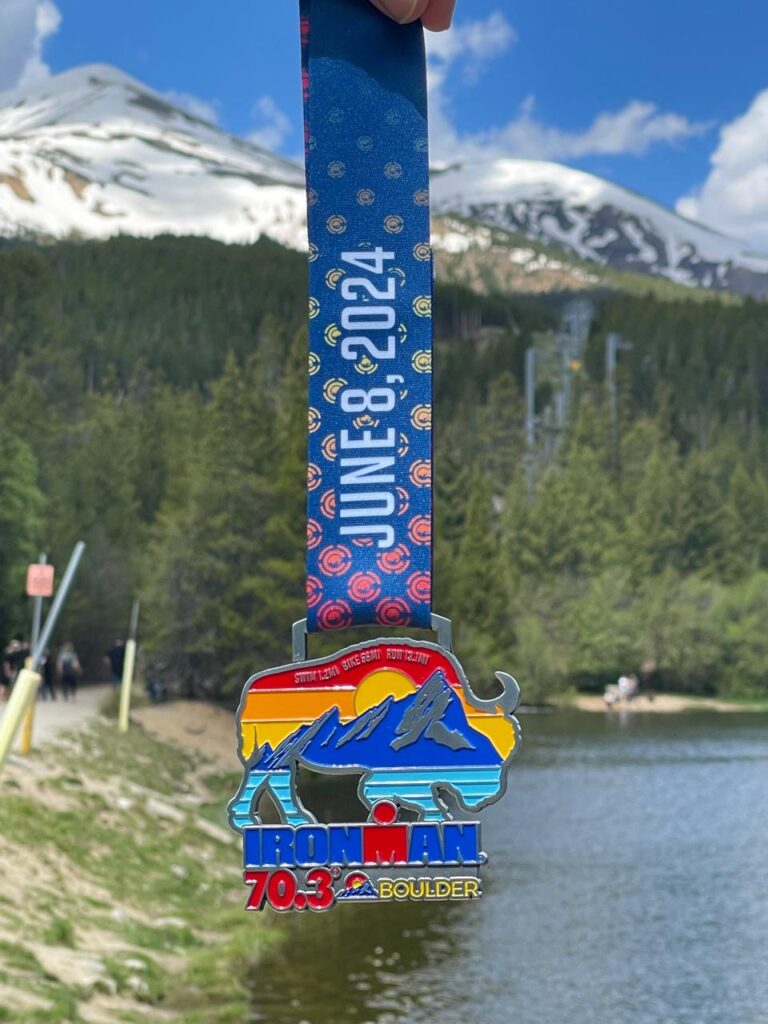
Best place to walk around with your finisher t-shirt? Boulder Colorado definitely. Post the race and for the day after countless passers by and random folk would come up and say "did you do the Ironman?". That’s amazing, fabulous, awesome…

As they say around here overall it was an aweeeeesome experience.
By David Hunt certified TriSutto coach