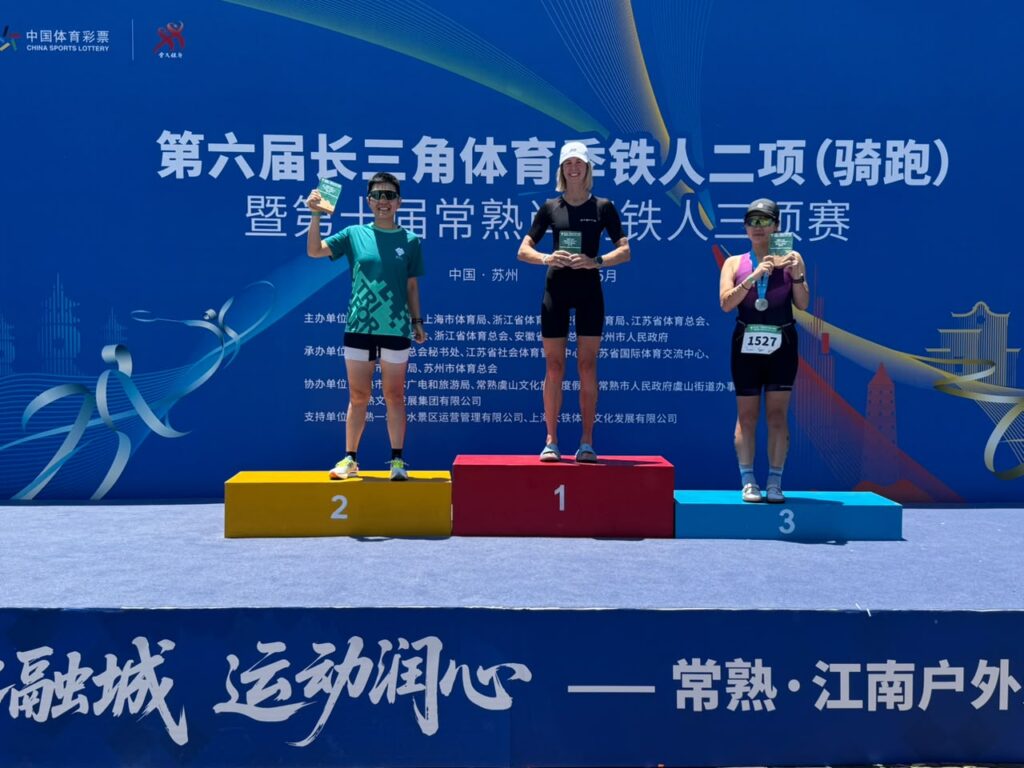

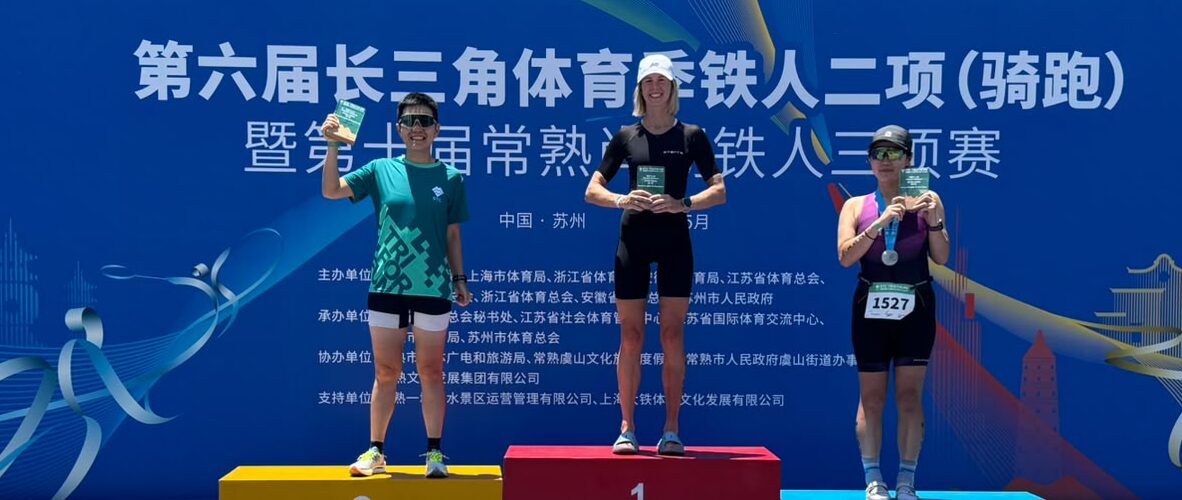
My experience training with Trisutto and the XTERRA Elite Team in China, by Caroline Bridges
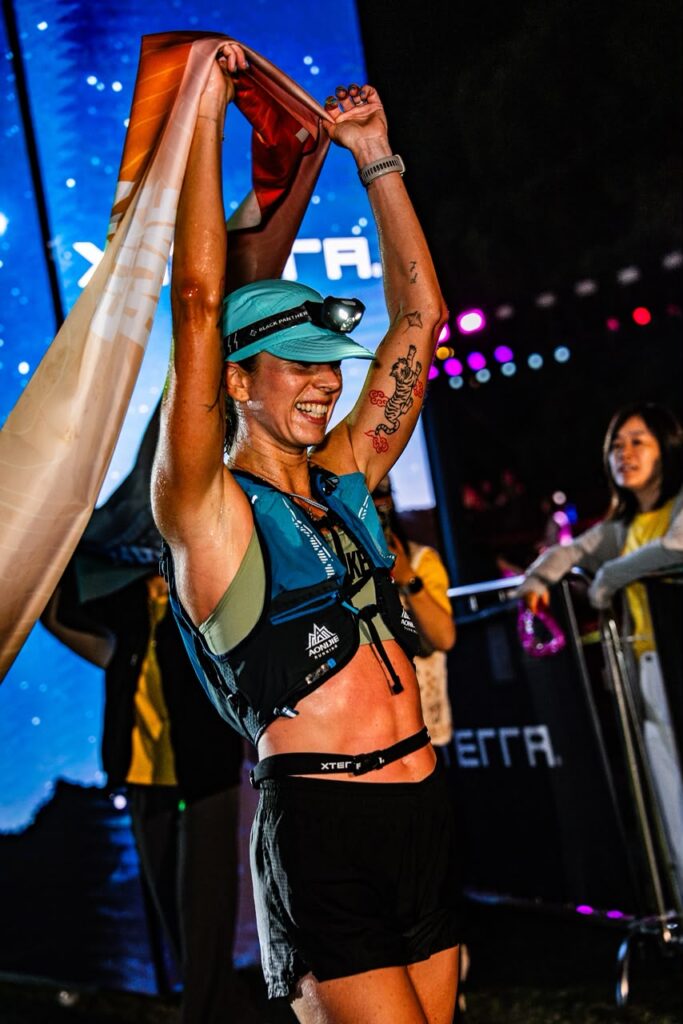
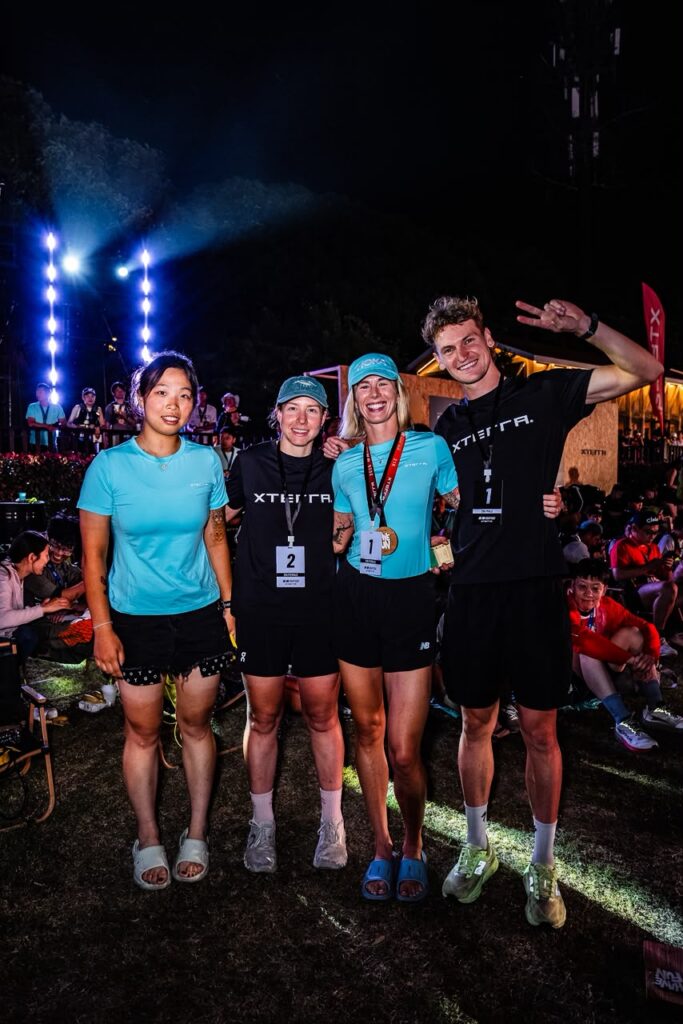
I spent almost two months in Suzhou, China as part of the XTERRA Elite Team, and looking back now, I can confidently say it was the most impactful experiences I have had as an athlete. As an age-grouper, stepping into a true elite environment represented a huge leap for me. It was not simply a step up in training volume or intensity, but a complete shift in the standard of coaching, the level of athletes around me, and ultimately the expectations I had of myself.
Many people have asked me the same question since I returned, so I should probably begin there: why China?
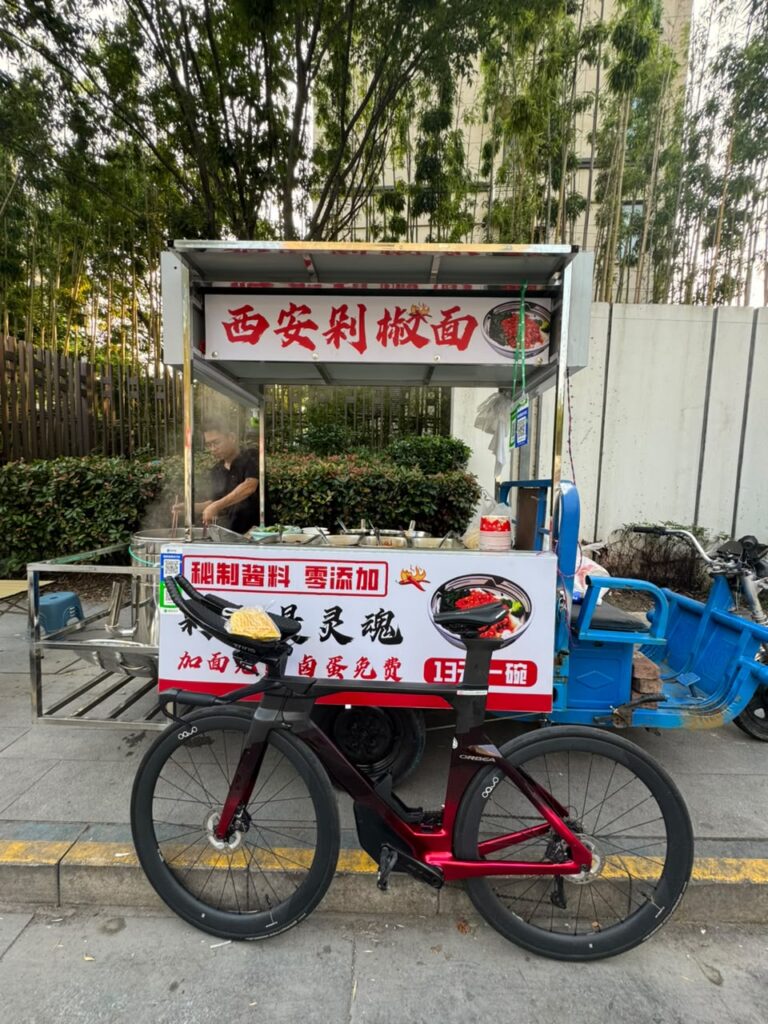
Over recent years, Trisutto has quietly built one of the most respected coaching systems in triathlon, producing some of the sport’s biggest names and shaping world champions, Olympic medalists and elite athletes across multiple disciplines. Brett Sutton, Trisutto’s head coach and one of the most influential figures in triathlon coaching, is currently based in Yuxi in China’s Yunnan province as Head Coach of the Chinese National Team.
Alongside this, Brett’s long time assistant coach and triathlon legend Susie Langley has been leading the XTERRA Elite Team in Suzhou, helping create an environment where athletes can immerse themselves in full-time training.
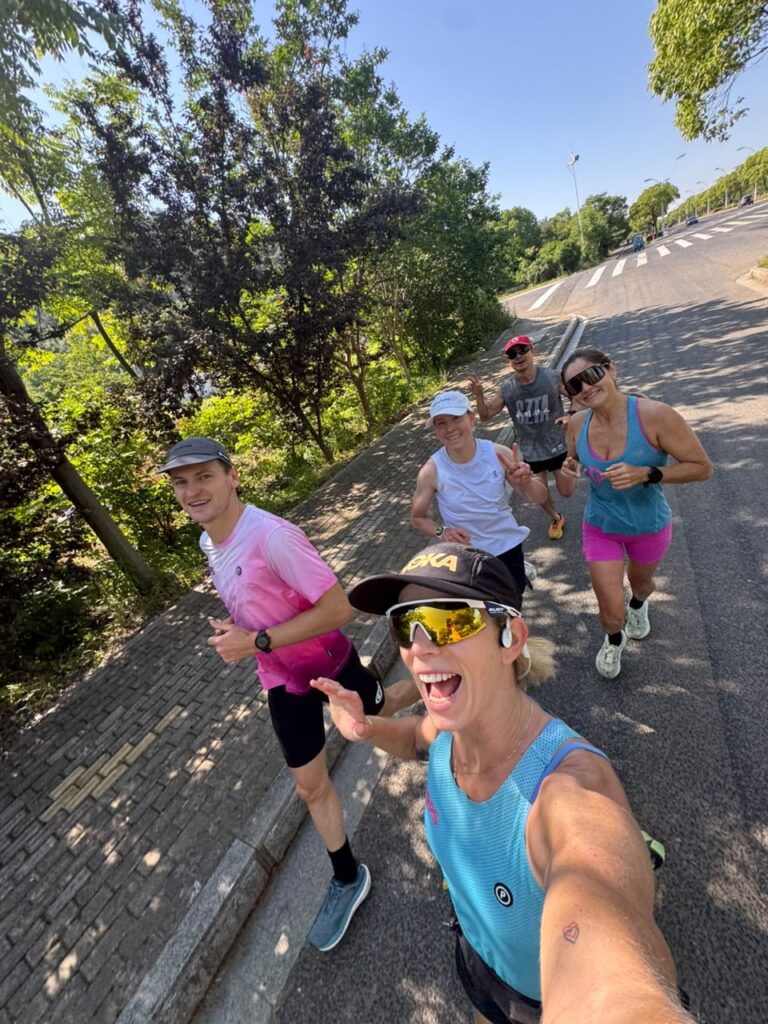
For me personally, the decision to join felt like an easy one.
I lived in Shanghai from February 2017 until September 2021, and although I left China several years ago, it never really felt like I left entirely. I absolutely loved my time there. I speak Mandarin, built a large part of my career there and, in many ways, the country became part of my identity. It was a place that shaped me both personally and professionally, and it remained somewhere I always felt deeply connected to.
So when the opportunity came to combine two of my biggest passions—China and triathlon—I jumped at it immediately.
While technically based in Suzhou, the XTERRA training camp itself sits on the outskirts of the city near Taihu Lake, around an hour and a half by metro from the city centre. The distance meant that we were removed from the pace and noise of city life and instead surrounded by nature. Taihu Lake, China's third-largest freshwater lake, is so vast that standing on the shore often felt more like looking out at the sea than a lake. The horizon stretches endlessly, and on many mornings it became the backdrop to our training days.
The training setup itself was ideal.
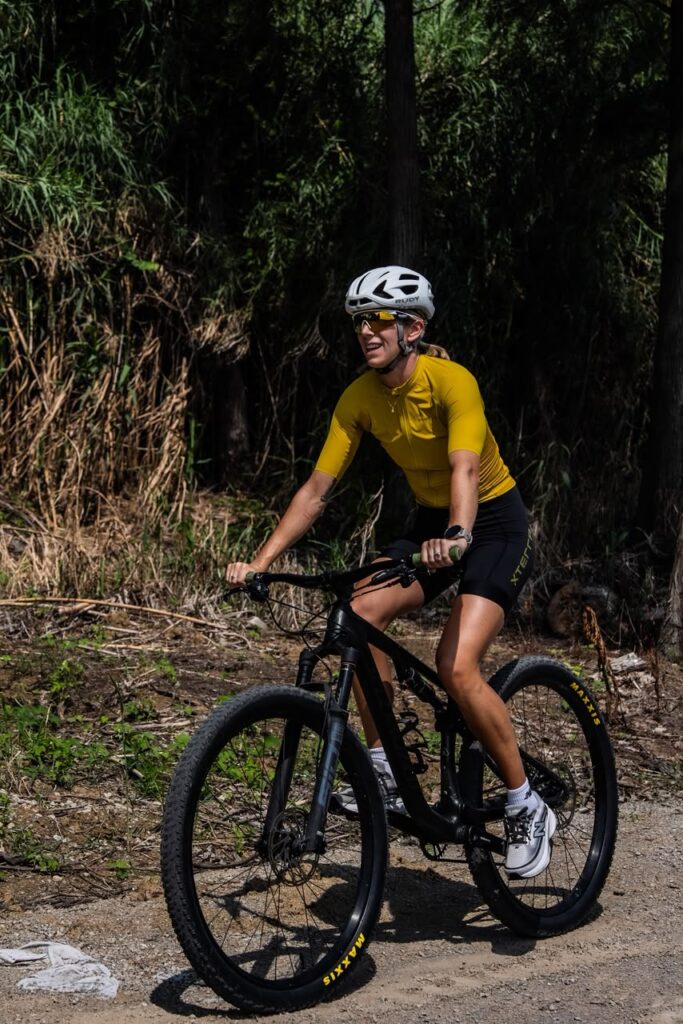
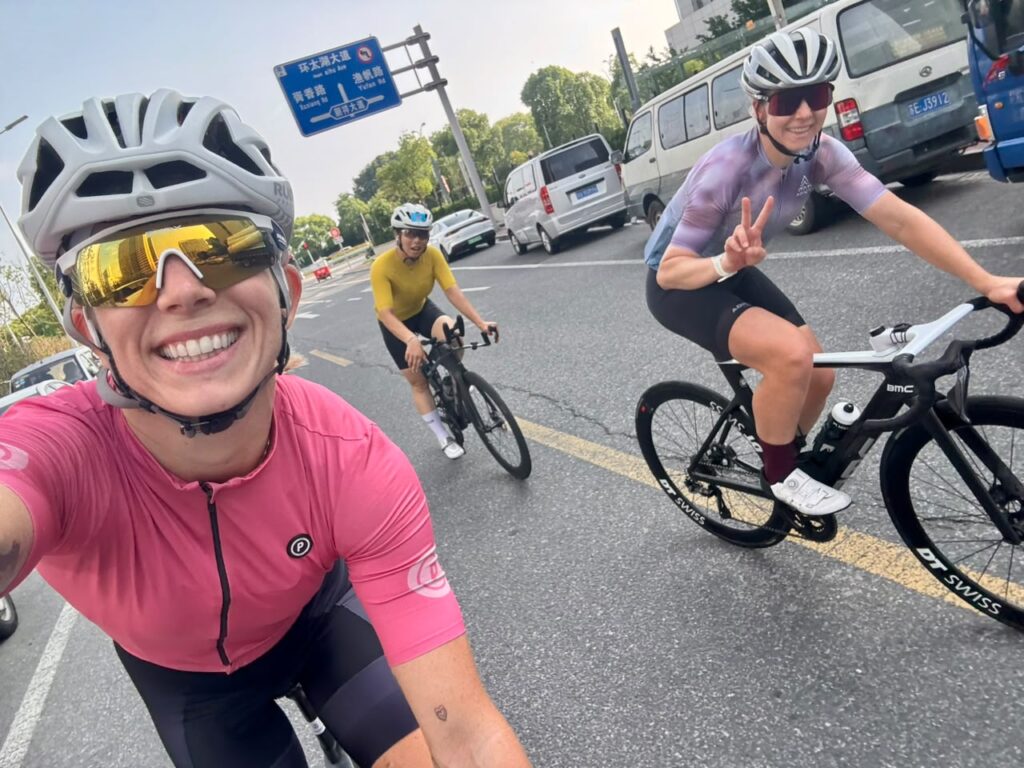
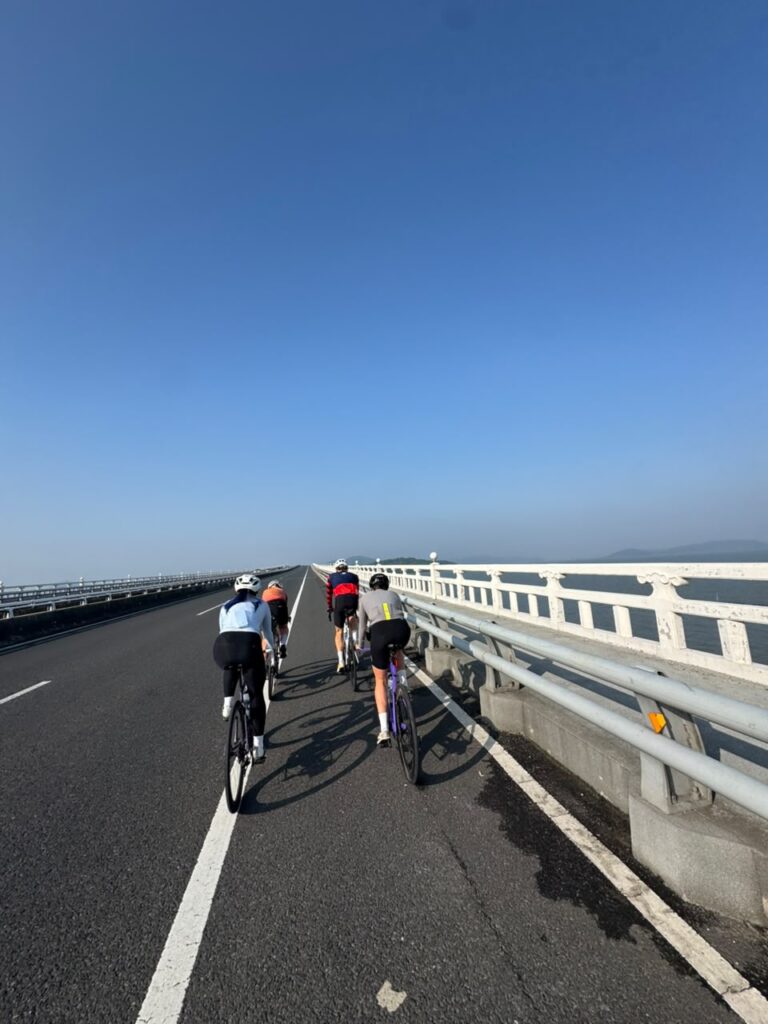
We had turbo trainers set up in our apartment for power sessions and indoor workouts, although whenever weather allowed, we were out on the roads. The roads around Taihu were incredibly smooth, with wide shoulders and very little traffic, making them perfect for both riding and running. One of our longer cycling loops took us across multiple islands connected by bridges, and it quickly became one of my favourite rides. There was something incredibly satisfying about riding uninterrupted for long stretches with water surrounding you on both sides.
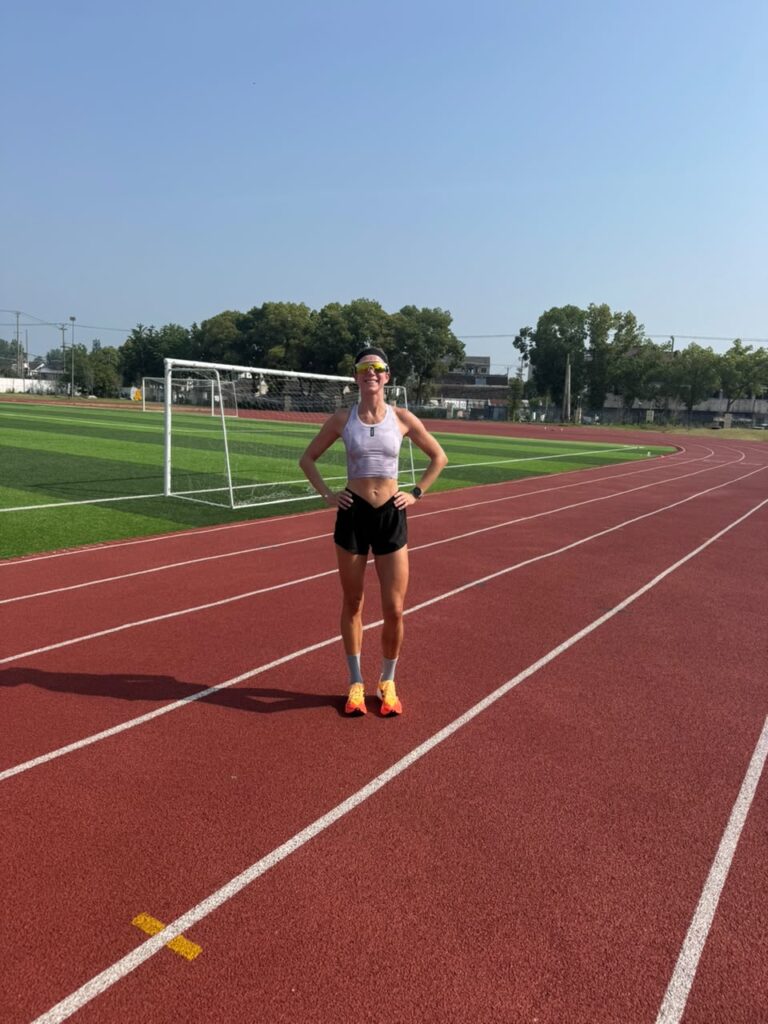
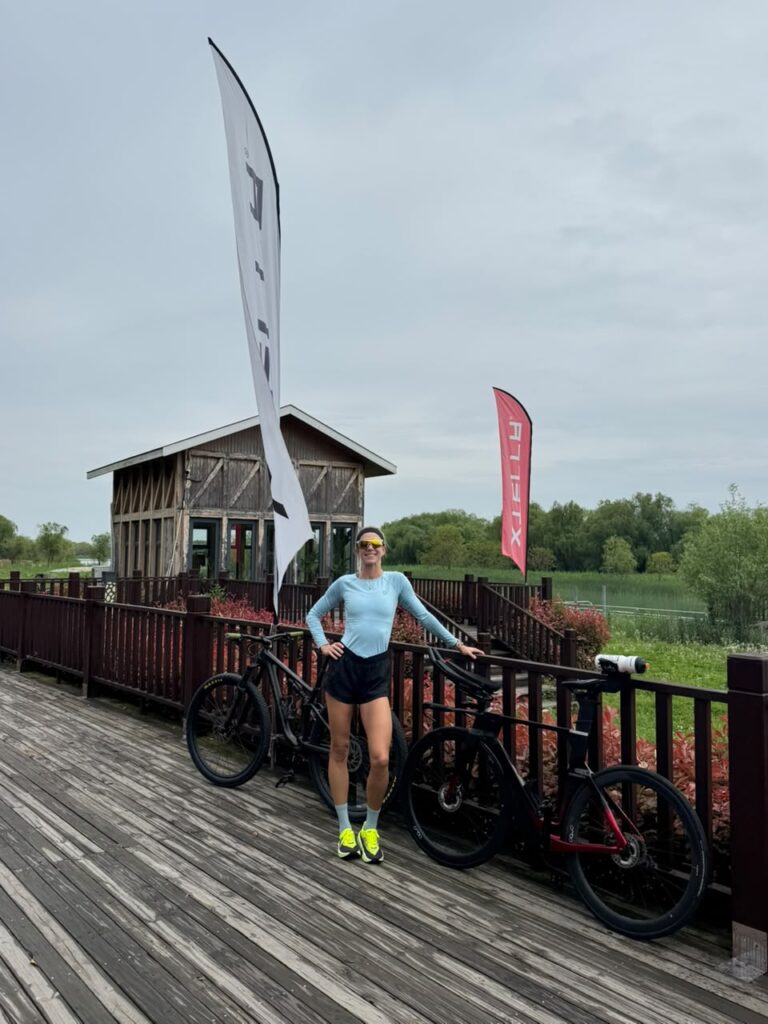
On Tuesdays we had access to a beautiful athletics track at a nearby school around five or six kilometres away from our apartment, which became the location for our track sessions. We also had access to a 25-metre pool located inside a nearby hotel, while the XTERRA base camp itself sat around six kilometres away on the edge of Taihu Lake. The base camp was genuinely stunning. It was set up with open water access for swims, mountain bike trails and training facilities, all surrounded by incredible scenery. Many of our open water swims happened after bike sessions or brick workouts, and being able to run straight into the lake after training felt like a luxury.
Although I had already been training under Trisutto principles through Sported for the past couple of years, actually living and training within the environment itself felt very different.
One of the biggest changes for me was the structure—or perhaps more accurately, the lack of structure.
At home in Dubai, life requires planning. I usually need to know roughly what my week looks like in advance so I can fit everything together around work commitments, training, dog walks, cooking, laundry and everything else that comes with normal life. Training has to exist alongside everything else.
Training camp stripped all of that away. The priorities became incredibly simple: train and recover.
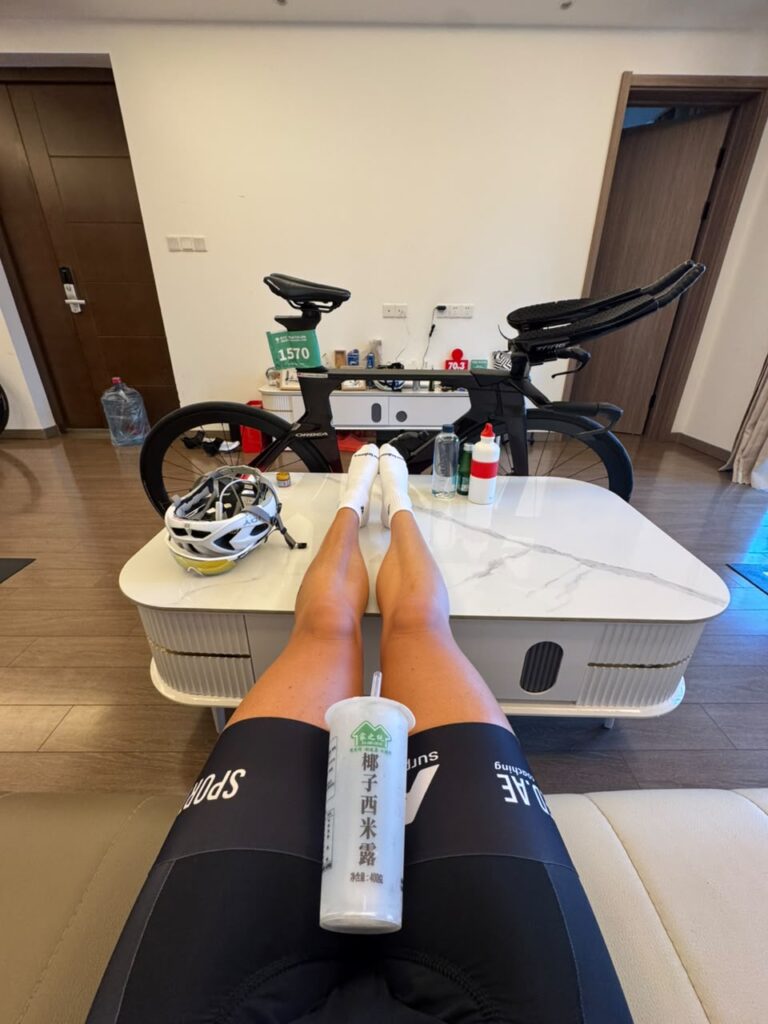
We rarely knew what our next session would be until the previous one had finished. Susie would simply tell us what we had next and the day would unfold from there. Initially, I found it surprisingly difficult to adapt to. I like structure and I like planning ahead. However, over time I realised there was something incredibly freeing about removing all of that mental noise. There was no energy spent juggling logistics or thinking three steps ahead. The only task was to focus entirely on executing the work in front of you.
Across swim, bike and run, I averaged around 21 to 22 hours of training each week. Surprisingly, the discipline that challenged me the most was swimming.
I had always considered swimming one of my strengths. As an age-grouper, I was already swimming what most people would consider fairly high volume, averaging between 12 and 15 kilometres per week. Arriving in Suzhou, that volume immediately jumped to around 25 kilometres per week.
Essentially overnight, I doubled my swim load.
I have been asked if I suddenly felt dramatically faster in the water because of it, and the answer is probably only a little. But that misses the point entirely. Within Trisutto, the philosophy is that we do not swim like swimmers, we swim like triathletes. The objective is not simply improving swim times in isolation. It is about building fitness and durability that transfers into the bike and run. It is about becoming stronger for the entire race.
Cycling involved plenty of big gear work, which felt familiar enough, although the turbo trainers we used in Suzhou seemed to have significantly more resistance than the one I train on at home. When I returned to Dubai, I was convinced something was wrong with my trainer because suddenly everything felt easier. I actually ended up recalibrating it!
The run sessions, however, were where I felt I discovered a different level of myself.
The track workouts pushed me further than I realised I was capable of going. One of my favourite sessions involved running 20 x 400 metres on a 1:30 turnaround with 30 seconds recovery. After somehow surviving all twenty repetitions, I remember feeling relieved that the session was finally over.
Then Robbie Haywood looked at me and said, "Now you have five more. Twenty is for age-groupers."
I quickly learned that there is a difference between finishing a session and being told you have finished a session.
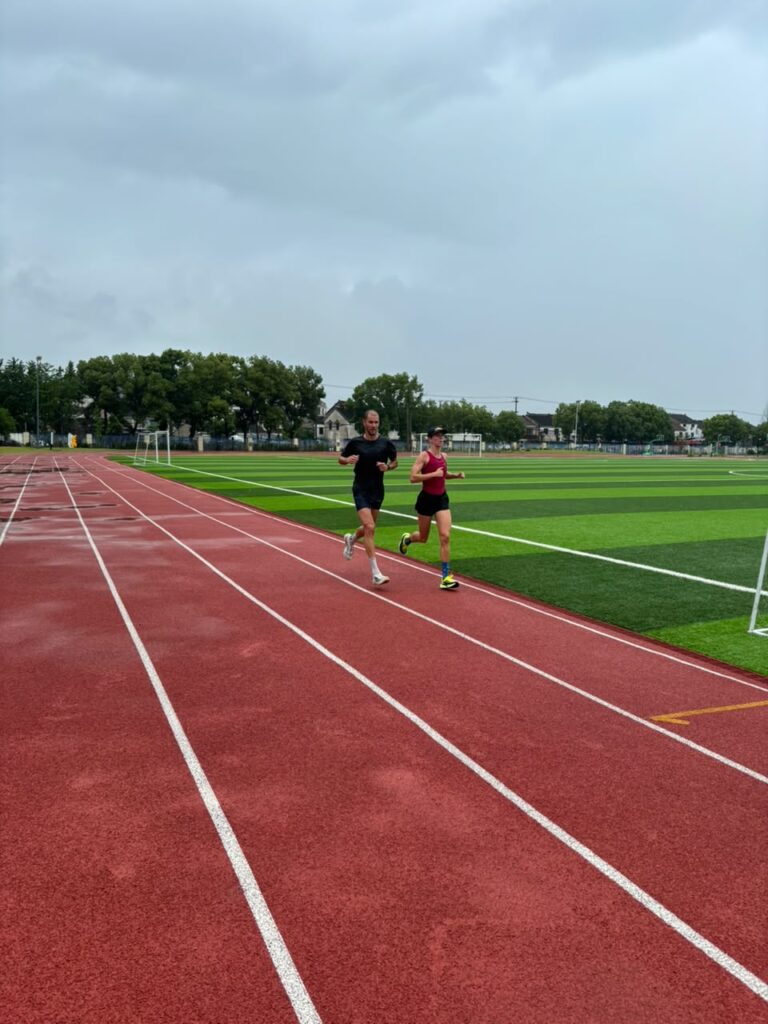
I also had the opportunity to share a track session with Michael Raelert, a 2x Ironman 70.3 World Champion. While I was hanging on through the set, Michael quietly asked if he could give me some advice and spent the next few reps coaching me through it. He gave me a few simple lessons around staying calm when a session starts slipping away, respecting that easy means EASY, and understanding that more is not always better. It was one of those moments that reminded me that being around great athletes is not just about witnessing performance, but also learning from their experience and mindset.
Overall, the experience was incredibly eye-opening, not only because of the training itself but because of the environment that surrounded it. Athletes would pass through between races, conversations would happen over meals or after sessions, and every day presented opportunities to absorb knowledge from people who had coached and raced at the highest levels of the sport.
What I valued most, however, was not necessarily any improvement in fitness, it was the way the environment raised my own standards. Being surrounded by people operating at a different level subtly changes your expectations of yourself. You stop questioning whether something is possible and start questioning why you thought it wasn't.