
Description
THE BENEFITS
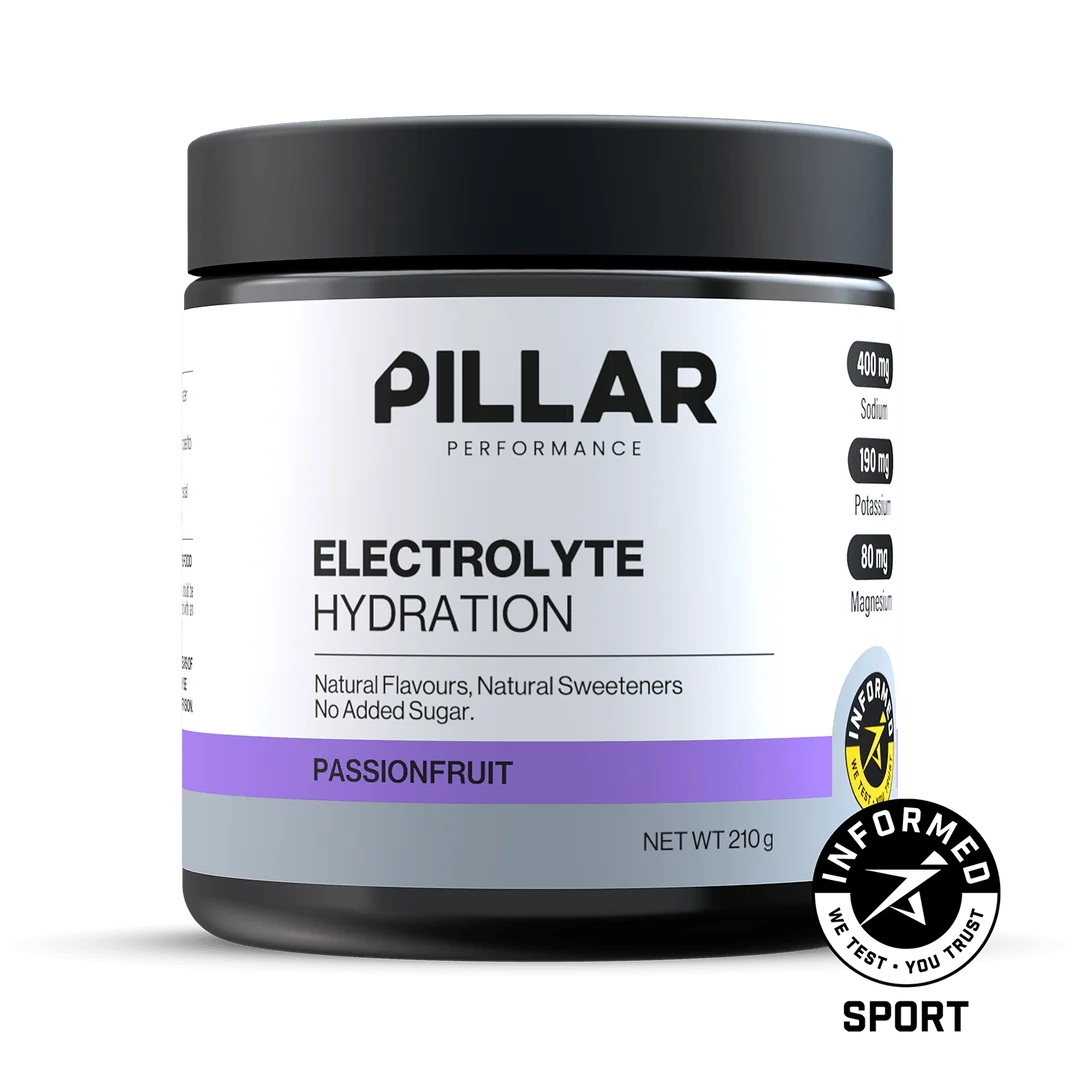
- 400mg sodium per serve.
- Naturally flavoured, no added sugar.
- Low calorie formula.
- Complete electrolyte profile.
- Rapid hydration support.
- Supports muscle function.





AED 199.50


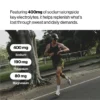
PILLAR Electrolyte Hydration is a scientifically formulated electrolyte powder designed to optimise hydration and support both physical and cognitive performance. Featuring 400mg of sodium per serve alongside a complete electrolyte profile, it helps replenish what's lost through sweat and daily demands - without the osmolarity risks that come with high-dose sodium products.
3 in stock
THE BENEFITS
Add 1 serve (7 g) to 500-750 ml of water and mix well before consuming. Consume before, during, or after exercise to support hydration and help replace electrolytes lost during training or physical activity. Maximum 4 servings per day.
Not suitable for persons under 15 years of age or pregnant women. Should only be used under medical or dietetic supervision.
ELECTROLYTE HYDRATION products are Informed Sport Certified.
To obtain the relevant Batch Certificate for this product, head to our Batch Certificate Library and search for your product’s batch number to find the corresponding certificate.
Everyone's adding more. We added exactly the right amount. Here's the science that made us rethink the electrolyte category and why getting hydration wrong on race day costs you more than you think.
If you've spent any time in the endurance world or been marketed to by electrolyte drinks, you've probably seen the arms race. More sodium. Higher doses. Bigger numbers on the label. The marketing logic goes: sweat is salty, so more salt means better hydration. But when we sat down with Dr. Dan Plews, our Head of Research, to formulate Electrolyte Hydration, we started from a completely different question.
Not how much sodium can we fit in a serve? But, what does the science actually say.
What Sweat Actually Takes From You
When you sweat, you lose a mix of electrolytes, but sodium is by far the dominant one. On average, you lose somewhere between 460–920mg of sodium per litre of sweat, with the full observed range sitting between 200–2,000mg/L depending on conditions, how heat-acclimatised you are, and what your diet looks like day to day.
Here's something that surprises most people: sweat sodium variation is not primarily genetic. It reflects your training history and your sodium intake. The more you train and the more dialled in your nutrition, the more efficient your body becomes at managing electrolyte loss.
Beyond sodium, your sweat also carries potassium, critical for membrane potential and cellular rehydration and magnesium, which plays a role in enzyme function, muscle contraction, and ATP synthesis. That's why a complete electrolyte profile matters.
The Word Nobody Talks About: Osmolarity
This is where most electrolyte products quietly get it wrong and where we think the conversation in the industry needs to evolve.
Osmolarity is the concentration of dissolved particles in a solution. For a drink to be absorbed quickly and effectively, that concentration matters enormously:
Hypotonic (<270 mOsm/kg) absorbed faster than blood plasma. Ideal as a standalone hydration drink.
Isotonic (270–330 mOsm/kg) matches blood plasma concentration. Absorbed well.
Hypertonic (>330 mOsm/kg) reverses the osmotic gradient. Instead of fluid moving into your body, water moves OUT of your bloodstream and INTO your gut, causing bloating, nausea, and delayed absorption.
At the recommended serve of 7g per 500ml, PILLAR Electrolyte Hydration delivers approximately 100–130 mOsm/kg, well hypotonic and rapidly absorbed, even before a single gram of carbohydrate hits the mix.
Why This Matters On Race Day
Here's the problem with high-sodium products that most brands aren't talking about: on race day, you're not drinking plain water. You're taking gels. You're running on carbohydrates. And every gram of carbohydrate in your system changes the osmolarity of what you're consuming.
We modelled exactly what happens when you pair different electrolyte doses with real-world race nutrition:
|
Scenario |
PILLAR | 400mg Na |
High-dose | 1,000mg Na |
|
Standalone, no carbs |
~103 mOsm/kg ✓ Hypotonic |
~173 mOsm/kg (no advantage) |
|
+ 6% maltodextrin |
~143 mOsm/kg ✓ Hypotonic |
~213 mOsm/kg ⚠ Borderline |
|
Race day: gel + 500ml water |
~289 mOsm/kg ✓ Isotonic |
~352 mOsm/kg ✗ Hypertonic |
|
+ 6% glucose drink |
~437 mOsm/kg ✗ Hypertonic |
~507 mOsm/kg ✗ Severely Hypertonic |
The table tells the real story. A high-sodium product paired with a standard race gel crosses into hypertonic territory, the exact situation that causes the GI distress athletes blame on their gels, their food, or just "a bad day." In reality, it's often the interaction between sodium load and carbohydrate that tips the balance.
Research note: Dr. Dan Plews, Head of Research: There is no scenario where 1,000mg Na per 500ml outperforms 400mg. In every scenario involving carbohydrates, excess sodium actively harms gut function, fluid delivery, and performance. The ACSM sports drink recommendation sits at 500–700mg/L - a 1,000mg/500ml product is 2.8–4x that guidance.
The GI Issue Nobody Wants to Admit
GI distress is the number one reason athletes abandon their race nutrition plan. Studies show 30–50% of Ironman athletes report significant GI symptoms during racing — nausea, bloating, vomiting, diarrhoea, abdominal cramping. Most write it off as gut sensitivity or nerves. Often, it's osmolarity.
The key modifiable risk factors aren't mysterious. High-osmolality drinks and gels. High fructose intake. Solid food during high-intensity efforts. Dehydration. Every one of these is addressable, and osmolarity-aware product formulation is where it starts.
PILLAR Electrolyte Hydration is designed to stay within the hypotonic to isotonic window across real-world race scenarios. Not just in a lab setting with plain water, but when you're actually racing and fuelling with gels, pushing hard, and asking a lot of your gut.
The Full Profile: Sodium, Potassium, Magnesium
We landed on our electrolyte ratios for specific, evidence-based reasons:
400mg Sodium: the evidence-based target for optimal hydration. Hypotonic standalone, rarely hypertonic in real-world use, and aligned with ACSM guidance. Not 600mg, not 1,000mg. 400mg.
190mg Potassium: supports membrane potential and cellular rehydration post-exercise. The citrate form also buffers acidity, which matters in high-intensity efforts.
80mg Magnesium (25% RDI): covers sweat losses and functions as an ATP synthesis cofactor. Delivered in citrate form for absorption efficiency.
No added sugar. No artificial flavours. Informed Sport Certified across every batch, so athletes competing under anti-doping regulations know exactly what they're putting in their body.
What We're Changing
The electrolyte category has defaulted to "more is more" with increased competition. Yes, more sodium looks impressive on a label and is easy to market.
We built Electrolyte Hydration around one principle: formulate for what the body can actually absorb, not what looks good on a nutrition panel. That means understanding osmolarity. Understanding how electrolytes interact with carbohydrates. And being willing to use a number like 400mg sodium when everyone else is chasing 1,000mg.
That's the White Line Range difference. Not louder, just smarter.
This post is intended for general education. Always consult a healthcare professional before commencing supplementation.
https://cdn.shopify.com/s/files/1/0568/8275/7684/files/ELECTROLYTE_HYDRATION_Fact_Sheet.pdf?v=1780897855
How much sodium is in PILLAR Electrolyte Hydration, and why that amount?
Each serve contains 400mg of sodium. That's the evidence-based target for optimal hydration. Enough to replenish what's lost through sweat, activate fluid absorption in the gut, and support plasma volume during exercise, without pushing the drink into hypertonic territory. Many products on the market contain 800–1,500mg per serve. The science doesn't support it. At those doses, any product combined with carbohydrates during exercise risks causing the very GI distress athletes are trying to avoid.
Can I use it during exercise, or is it just for before and after?
Both. At the standard serve (7g in 500ml), PILLAR Electrolyte Hydration sits at approximately 100–130 mOsm/kg. Well within the hypotonic range, meaning it's absorbed faster than plasma. That makes it suitable as a standalone sip throughout the day and as an active hydration drink during exercise. Mix it into up to 1L of water for longer sessions.
Can I stack it with an energy gel during a race?
Yes. And this is exactly what the formulation is designed for. Because PILLAR uses 400mg of sodium rather than the high-dose approach, when you add a gel the combined osmolarity stays in the isotonic range (approximately 289 mOsm/kg). At 1,000mg sodium per serve, that same combination tips into hypertonic territory, which slows absorption and increases GI distress risk.
Is it suitable for everyday use, not just sport?
Yes. The formula is low calorie, has no added sugar, and is naturally sweetened. It works just as well for daily hydration. Particularly useful first thing in the morning when most people are mildly dehydrated, or on hot days when sweat losses are higher without formal exercise.
Is it Informed Sport certified?
Yes. Every batch is tested and certified by Informed Sport, meaning it's free of banned substances. Safe for athletes competing under anti-doping regulations at any level.
Does it contain caffeine or stimulants?
No. PILLAR Electrolyte Hydration is completely caffeine free, making it appropriate any time of day including evening training or before bed.
Why three electrolytes (sodium, potassium, and magnesium) and not more?
Because those are the three electrolytes most meaningfully lost through sweat and most impactful on performance and recovery. Sodium is the dominant sweat electrolyte and drives fluid regulation.
Potassium works in balance with sodium to maintain fluid across cell membranes and supports muscle contraction. Magnesium covers sweat losses and is a co-factor for ATP synthesis and muscle function. Adding more electrolytes at trace doses looks impressive but adds osmolarity without meaningful benefit. The formulation is built around what the research supports, not what reads well on the label.
Total reviews
Persons recommended this product
Anonymous
Shopper
check_circle Verified
Shop owner replied
Anonymous
Shopper
check_circle Verified
Shop owner replied
There are no reviews yet.
Be the first to review “ ”
Your feedback helps us improve our service.
Please log in to submit a review.